 Diana Muthini
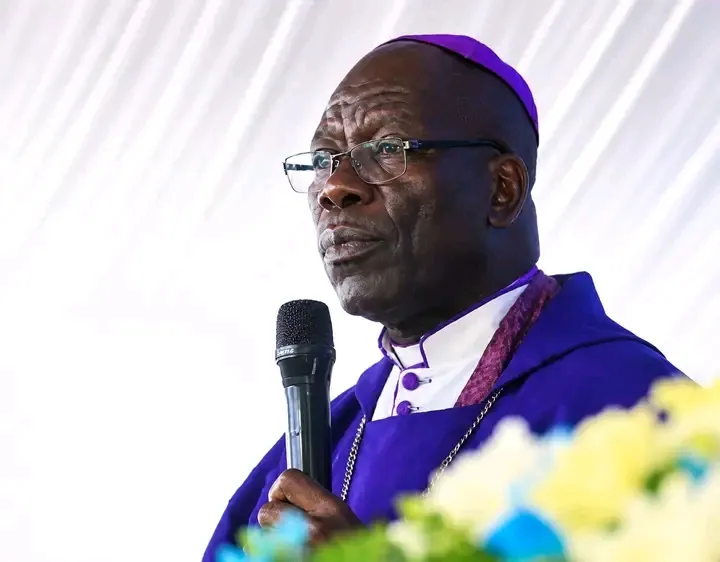
The relationship between the cloth and the crown has always been a delicate dance. Ideally, a religious leader is a shepherd—a figure whose arms are wide enough to embrace a congregation that spans the entire political spectrum. But in our increasingly polarized world, the expectation that a "man of God" should remain a neutral, universally loved figure is clashing violently with the reality of modern ministry.
When a spiritual leader becomes a darling of the state or a hero of the opposition, it raises a fundamental question: Is the shepherd still leading the flock, or has he joined a political tribe?
The Myth of Universal Popularity
The idea that a man of God should be loved by everyone is a noble sentiment, but it’s one that finds little support in history. Most iconic spiritual figures were deeply divisive in their time precisely because they stood for principles that challenged the status quo.
However, the modern problem arises when the division isn't caused by a moral stand, but by partisan loyalty.
The Shepherd’s Neutrality: In a perfect world, a leader’s office is a "green zone" where a government minister and an opposition activist can kneel side-by-side.
The Perception of Failure: When a cleric’s rhetoric consistently mirrors a party’s manifesto, the "other side" feels alienated. At that point, the pulpit stops being a place of sanctuary and starts being a platform for propaganda.
"If the message preached doesn’t challenge the person you voted for, you might not be sharing a spiritual truth; you might be sharing a political preference."
The Hypocrisy of the "Political Pulpit"
One of the loudest complaints from the clergy is the "desecration" of the pulpit by politicians who use church services to campaign. Yet, there is a biting irony when those same leaders use their sermons to deliver thinly veiled endorsements or attacks.
This creates a cycle of cynicism:
The Accusation: The cleric rebukes the politician for "politicking" in the House of God.
The Contradiction: The cleric then uses their authority to validate one ideology over another.
The Result: The congregation begins to see the man of God not as a moral compass, but as a political commentator with a better wardrobe.
When Taking a Side Becomes a Failure
There is a distinct difference between standing for justice and standing for a candidate. A man of God "fails" not when he speaks truth to power, but when he becomes a tool for power.
If only one side of the political divide supports a religious leader, it suggests that the message has been compromised. He is no longer a bridge-builder; he has become a gatekeeper for one particular camp. When the "man of God" is seen wearing the jersey of a political team, he loses the ability to referee the moral landscape of the nation.
The Path Back to Unity
To be a truly unifying figure, a leader must regain the "clout of the middle." This doesn't mean being silent on social issues. On the contrary, it means having the courage to:
Applaud the government when they provide for the citizens.
Challenge the government when they infringe on rights.
Encourage the opposition to be constructive for the sake of the country.
Rebuke the opposition when they incite chaos.
The ultimate goal of a spiritual leader is to point toward a higher standard of living and morality. When they descend too far into the trenches of earthly elections, they lose the perspective needed to lead everyone. A man of God should be a mirror for society—reflecting our flaws and our potential—rather than a megaphone for a political party.
If the salt loses its saltiness—or in this case, its neutrality—what good is it for seasoning the soul of a nation?