 CALEB MWENDWA MUSYOKI
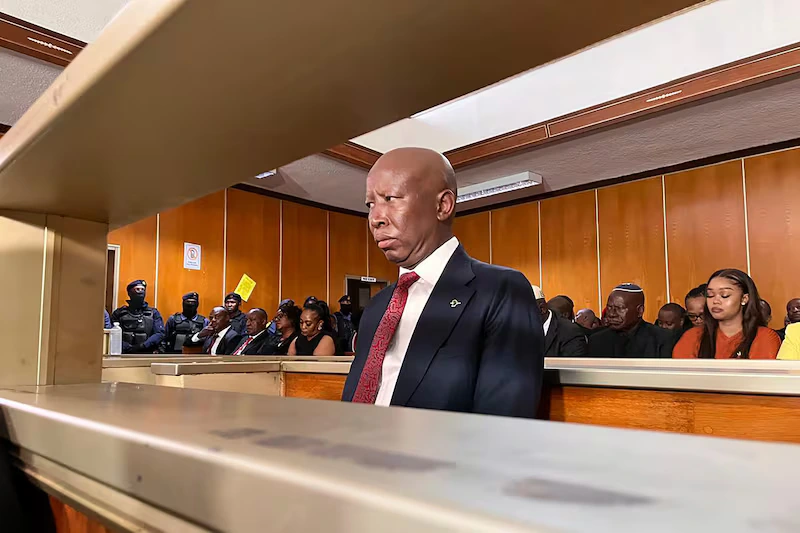
South Africa’s political landscape has been shaken following the sentencing of Julius Malema, a prominent opposition leader and head of the Economic Freedom Fighters (EFF), to five years in prison.
The ruling, delivered on April 16, 2026, stems from a controversial 2018 incident in which Malema was filmed firing what appeared to be a rifle during a political rally. The court found him guilty of illegal possession and discharge of a firearm, rejecting his defense that the weapon was a harmless prop.
The court emphasized the seriousness of firearm-related offenses, stating that public figures must be held to a higher standard, especially in a country grappling with high levels of gun violence. Prosecutors had initially sought a harsher sentence, but the court settled on five years.
Malema’s legal team has already moved to appeal the decision, setting the stage for a prolonged legal battle that could ultimately determine his political future.
Political Ramifications
As the leader of the EFF, Malema has been one of the most influential and polarizing figures in South African politics. Known for his fiery rhetoric and strong appeal among young voters, his potential absence from active politics could significantly weaken the opposition landscape.
If the conviction is upheld after appeal, Malema risks losing his parliamentary seat—an outcome that could reshape the balance of power within South Africa.
Public Reaction
The sentencing has sparked mixed reactions across the country. Supporters of Malema have rallied behind him, describing the ruling as politically motivated, while critics argue that the decision reinforces the rule of law and accountability.
The case has also reignited debates about leadership responsibility, political conduct, and the limits of public behavior among influential figures.
A Wider Impact
Beyond South Africa, the case has drawn attention across Africa, with analysts viewing it as a defining moment for governance and judicial independence in the region.
For many observers, the key question remains whether this ruling signals a strengthening of democratic institutions—or deepens political divisions.