 Faith Masita
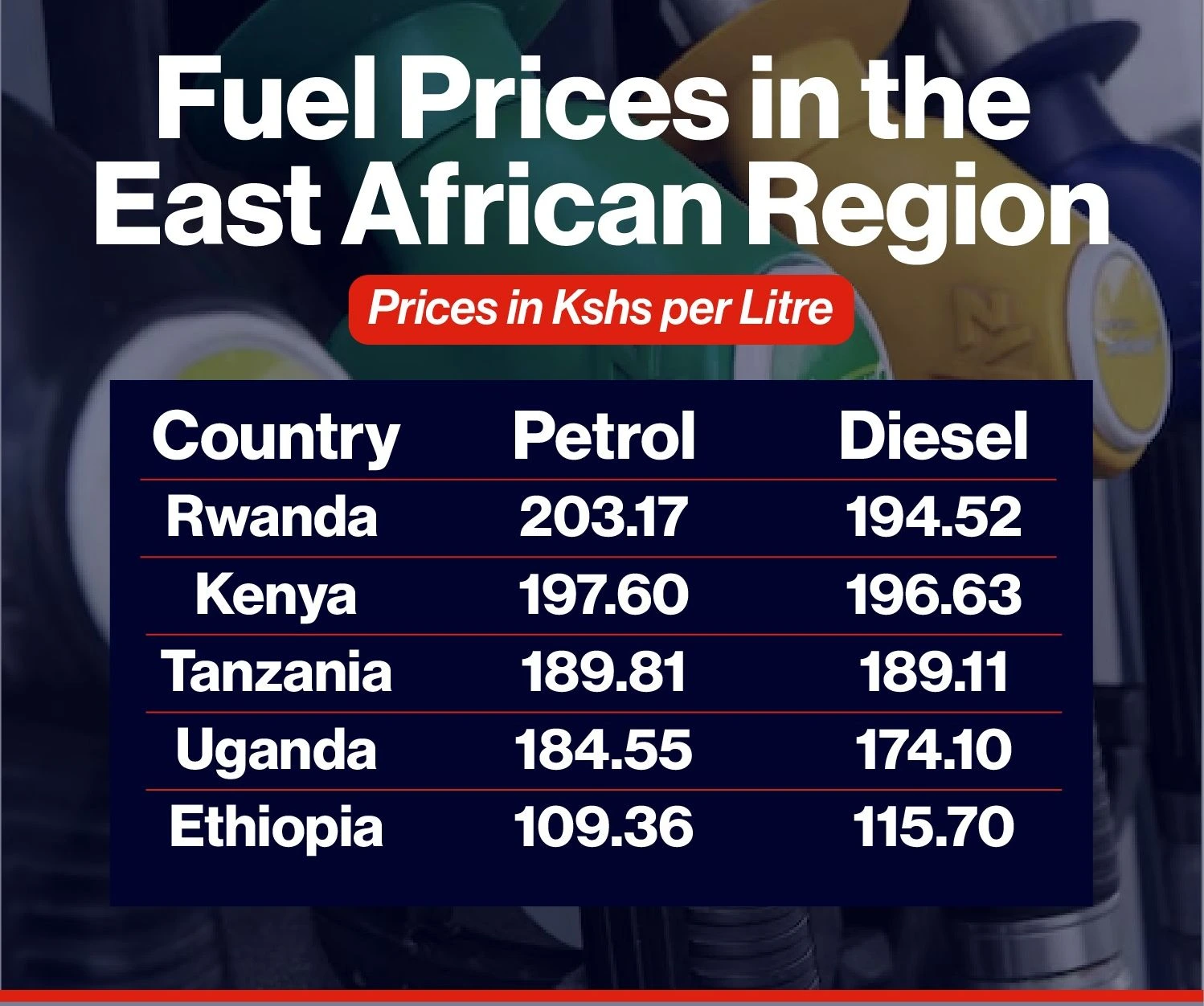
Motorists across East Africa are facing mixed fuel price trends, with Kenya maintaining relatively high pump prices compared to some of its regional peers, as governments adjust taxes, subsidies, and respond to global oil market pressures.
In Kenya, the latest prices released by the (EPRA) place petrol at approximately KES 193–200 per litre in major towns, while diesel retails at about KES 180–190 per litre, depending on location. The pricing reflects tax components and the ongoing fuel stabilization measures.
In Uganda, fuel prices remain slightly lower, with petrol averaging around KES 165–175 per litre, while diesel is estimated at KES 155–165 per litre. Uganda’s liberalized fuel market, with minimal subsidies, allows pump prices to fluctuate more directly with global oil costs.
In Tanzania, motorists are paying about KES 150–165 per litre for petrol and KES 145–160 per litre for diesel. Government intervention and strategic fuel imports have helped keep prices comparatively stable in recent months.
Meanwhile, Rwanda records petrol prices at roughly KES 170–180 per litre, with diesel retailing at KES 165–175 per litre, reflecting periodic government reviews and adjustments to cushion consumers from global price volatility.
South Sudan continues to experience the highest and most volatile prices in the region due to supply chain challenges and currency instability, with petrol and diesel often exceeding KES 200 per litre.
Energy analysts attribute the regional price differences to varying tax regimes, currency strength, infrastructure costs, and the level of government subsidies. “Fuel pricing in East Africa is less about crude oil prices alone and more about domestic policy decisions,” a regional energy expert noted.
With global oil prices remaining unpredictable and local currencies under pressure, East African consumers are likely to continue experiencing fluctuations at the pump in the coming months.