 CALEB MWENDWA MUSYOKI
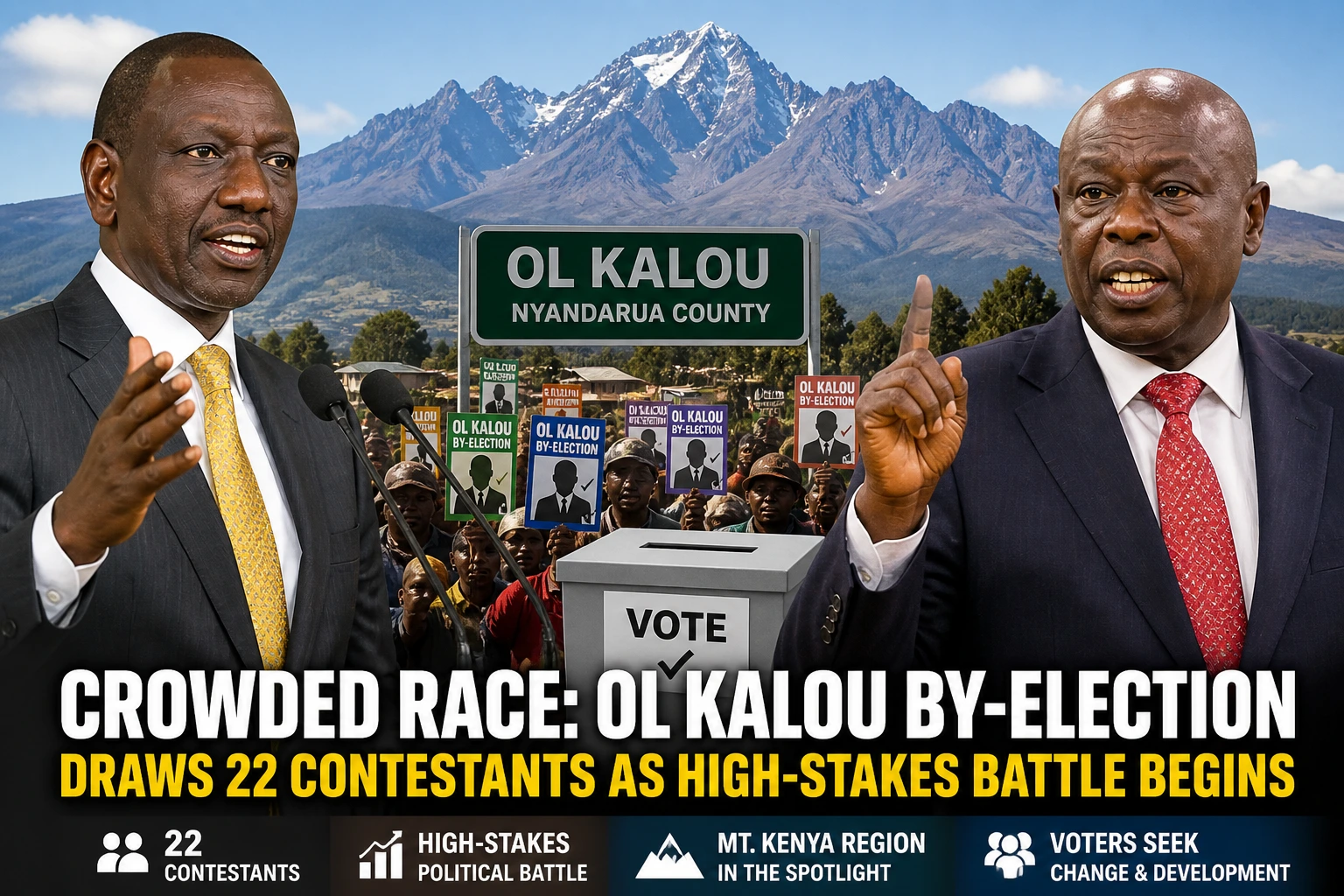
The political temperature in Ol Kalou is rising sharply after a staggering 22 candidates officially entered the race for the upcoming parliamentary by-election, setting the stage for one of the most competitive contests in recent Kenyan politics.
The by-election, triggered by a vacancy in the constituency, has attracted a diverse mix of aspirants—from seasoned politicians and party loyalists to independent candidates and fresh faces hoping to ride the wave of voter dissatisfaction and demand for change.
The by-election, triggered by a vacancy in the constituency, has attracted a diverse mix of aspirants—from seasoned politicians and party loyalists to independent candidates and fresh faces hoping to ride the wave of voter dissatisfaction and demand for change.
Major political parties have thrown their weight behind their candidates, turning the race into a proxy battle for national influence. Allies of William Ruto and factions linked to Rigathi Gachagua are closely watching the contest, viewing it as a test of grassroots support and political dominance in the Mt. Kenya region.
At the same time, independent candidates are banking on local issues, arguing that party politics has failed to address the real needs of the people.
At the same time, independent candidates are banking on local issues, arguing that party politics has failed to address the real needs of the people.
As campaigns gather momentum, several issues are dominating the conversation among voters:
Cost of living – Residents are demanding practical solutions to rising food and fuel prices.
Youth unemployment – With a large youth population, job creation remains a top priority.
Infrastructure and development – Roads, healthcare, and education services are central campaign themes.
Political representation – Voters are keen on electing a leader who will actively represent their interests in Parliament.
Cost of living – Residents are demanding practical solutions to rising food and fuel prices.
Youth unemployment – With a large youth population, job creation remains a top priority.
Infrastructure and development – Roads, healthcare, and education services are central campaign themes.
Political representation – Voters are keen on electing a leader who will actively represent their interests in Parliament.
Candidates are crisscrossing villages, holding rallies, and engaging directly with voters in what has become an intense ground campaign.
With 22 candidates in the race, analysts predict a highly fragmented vote, making it difficult to call a clear frontrunner. Even candidates with strong party backing face stiff competition from local figures with deep community ties.
Political observers warn that such a crowded field could result in a winner with a relatively small percentage of the total vote, increasing the stakes for voter turnout and strategic campaigning.
Political observers warn that such a crowded field could result in a winner with a relatively small percentage of the total vote, increasing the stakes for voter turnout and strategic campaigning.
Beyond the constituency, the Ol Kalou by-election is being viewed as a litmus test for national political alignments ahead of future elections. The outcome could reshape alliances and influence power dynamics within key political camps.
For voters, however, the focus remains closer to home: electing a leader who will deliver tangible change.
As the campaign period intensifies, all eyes will be on Ol Kalou. With emotions high, alliances shifting, and competition fierce, the by-election promises not just a political contest—but a defining moment for the constituency.
As the campaign period intensifies, all eyes will be on Ol Kalou. With emotions high, alliances shifting, and competition fierce, the by-election promises not just a political contest—but a defining moment for the constituency.
One thing is certain: in a race this crowded, every vote will count.