 Faith Masita
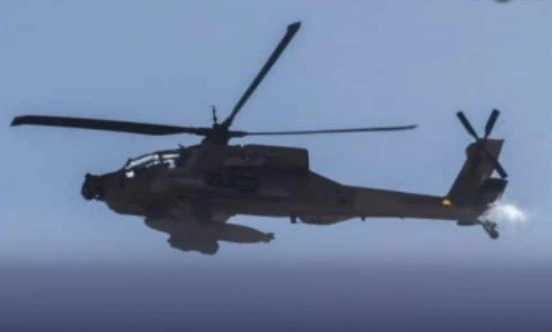
The United States launched a series of military strikes against Iran on Tuesday after an American Army Apache helicopter was brought down near the Strait of Hormuz, marking a sharp escalation in tensions between the two countries.
According to the U.S. Central Command (CENTCOM), the strikes were carried out as a "self-defense" measure following what Washington described as an unjustified attack on the helicopter. President Donald Trump authorized the operation, insisting that the United States had to respond to the incident while maintaining that it was not seeking a wider conflict.
Washington says attacks were a defensive response as tensions with Tehran escalate
The Apache helicopter was reportedly downed on Monday while operating near the Strait of Hormuz. Both crew members were rescued and are said to be in stable condition after a swift recovery operation involving U.S. military assets.
U.S. officials said the retaliatory strikes targeted Iranian air-defense systems, radar installations and command facilities believed to be linked to the attack. Iranian authorities confirmed that several locations in the southern coastal region, including areas around Qeshm Island and Sirik, were hit.
Iran condemned the strikes and warned that any further military action would be met with a response. Iranian Foreign Minister Abbas Araghchi said foreign military forces operating close to Iran's borders faced constant risks, while reiterating Tehran's preference for diplomacy.
The exchange of strikes has raised fears of a broader confrontation in the Middle East, despite ongoing diplomatic efforts aimed at preserving a fragile ceasefire that has been under strain in recent weeks.