 Diana Muthini
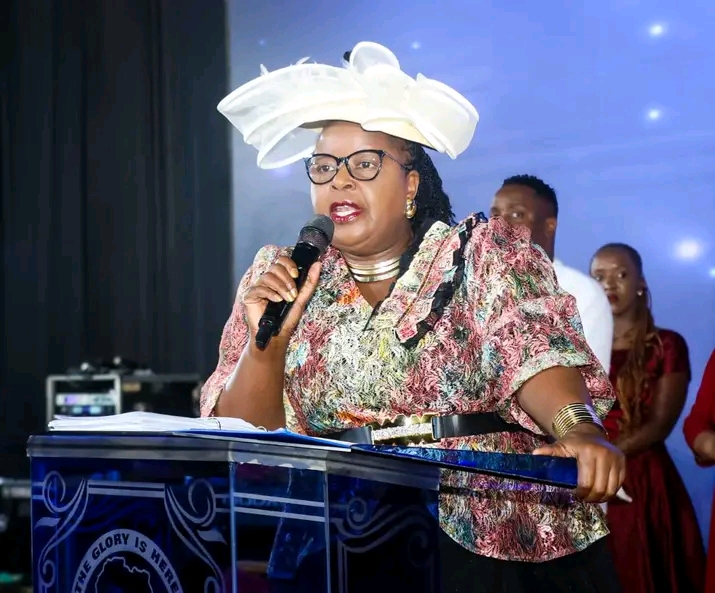
In Kenya’s vibrant and often complex political arena, few personalities have managed to command attention across both religious and political platforms quite like Margaret Wanjiru. A preacher, a mobilizer, and a politician, Bishop Wanjiru’s life story is one of resilience, transformation, and an unrelenting pursuit of influence. Her journey from humble beginnings to national prominence mirrors the aspirations of many Kenyans who seek to rise above adversity and make a lasting impact on society.
Born into a modest family, Wanjiru’s early life was shaped by hardship and struggle. Like many who grow up in challenging environments, she faced obstacles that could have easily limited her ambitions. However, her determination and faith became the driving forces behind her rise. She often speaks openly about her past, using it as a testimony to inspire others, especially women and youth, to believe in their potential regardless of their background.
Her spiritual journey began with a deep commitment to Christianity, eventually leading her to establish the Jesus Is Alive Ministries. What started as a small ministry grew into a powerful religious movement with a significant following, particularly in urban areas such as Nairobi. Through her church, Wanjiru built a strong grassroots network, earning her influence among ordinary citizens who connected with her message of hope, transformation, and empowerment. This religious base would later become a cornerstone of her political career.
Bishop Wanjiru’s transition into politics was both strategic and mission-driven. She entered the political scene with a desire to address the socio-economic challenges affecting many Kenyans. Her message resonated with the electorate, particularly those in underserved communities who felt neglected by traditional political leadership. Her big breakthrough came when she was elected as the Member of Parliament for Starehe Constituency, a position that placed her at the heart of national decision-making.
During her tenure in Parliament, Wanjiru distinguished herself as a bold and outspoken leader. She was known for her ability to connect with the common mwananchi, often advocating for policies that addressed poverty, unemployment, and access to basic services. Her speeches frequently blended political arguments with moral and spiritual undertones, reflecting her belief that leadership should be guided by strong ethical values. This unique approach earned her both admiration and criticism, as some viewed her as a refreshing voice while others questioned the appropriateness of merging religion with state affairs.
Her political journey has been closely linked with major political figures and movements in Kenya. Notably, she aligned herself with Raila Odinga and became part of the Orange Democratic Movement. Through this association, she positioned herself within the broader opposition politics, contributing to national debates on governance, democracy, and reforms. Her loyalty and active participation in political campaigns further cemented her status as a key mobilizer within her party.
However, like many politicians, Bishop Wanjiru’s path has not been without setbacks. She has faced electoral defeats that tested her political strength and resilience. Despite these challenges, she has consistently demonstrated an ability to reinvent herself and remain relevant in the ever-changing political landscape. Her persistence reflects a deeper commitment to her vision rather than a mere pursuit of power.
One of the most defining and sometimes controversial aspects of her career is the intersection of her religious leadership with her political ambitions. In a country where religion plays a central role in society, Wanjiru has effectively leveraged her position as a bishop to influence public opinion and mobilize support. Her church gatherings often double as platforms for civic engagement, where she addresses not only spiritual matters but also national issues. While her supporters view this as a strength that brings moral direction to politics, critics argue that it blurs the line between church and state.
Beyond politics and religion, Bishop Wanjiru has been a strong advocate for women’s empowerment. In a political environment that has historically been male-dominated, she has broken barriers and challenged stereotypes. Her rise to prominence serves as an inspiration to many women who aspire to leadership roles. She has consistently called for greater inclusion of women in decision-making processes, emphasizing that gender equality is essential for national development.
Her voice has also been present in discussions on governance and accountability. Wanjiru has not shied away from speaking out against corruption and poor leadership, often urging leaders to uphold integrity and serve the interests of the people. Her approach, rooted in both faith and political ideology, continues to shape her public image as a leader who is deeply committed to ethical governance.
In recent years, Bishop Wanjiru has remained active in Kenya’s political discourse, adapting to new dynamics and maintaining her influence. Whether through public statements, political alignments, or community engagement, she continues to be a recognizable and impactful figure. Her ability to stay relevant in a competitive political environment speaks to her resilience and strategic thinking.
As Kenya moves forward, grappling with economic challenges, governance reforms, and social transformation, leaders like Margaret Wanjiru continue to play a significant role in shaping the national conversation. Her journey highlights the power of faith, the importance of perseverance, and the complexities of leadership in a modern democracy.
Ultimately, Bishop Margaret Wanjiru’s story is not just about politics or religion—it is about the relentless pursuit of purpose. She represents a unique blend of spiritual conviction and political ambition, a combination that has defined her career and set her apart in Kenya’s public life. Whether admired or critiqued, her influence is undeniable, and her legacy continues to unfold in the ever-evolving story of Kenyan politics.