 CALEB MWENDWA MUSYOKI
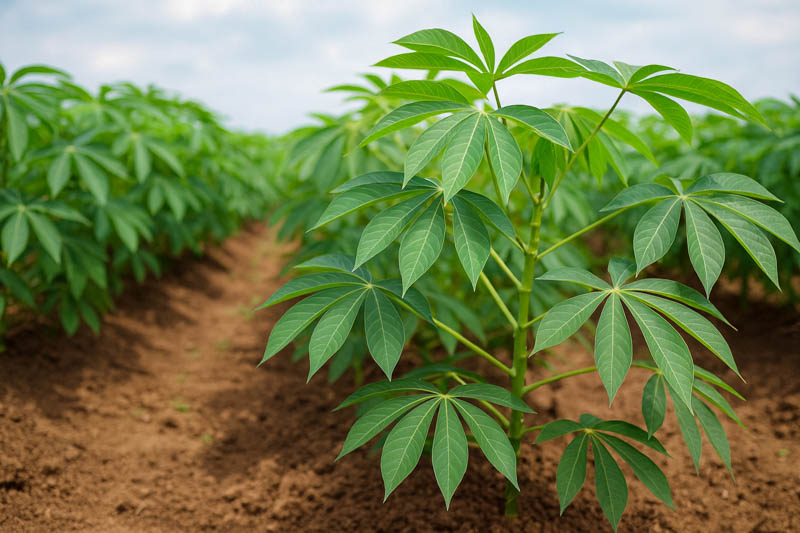
Cassava is often overlooked in Kenya, yet it has the potential to transform both food security and rural incomes. As climate patterns become more unpredictable, this hardy crop is increasingly proving to be a smart choice for farmers across the country.
1. Drought Resistance and Climate Adaptation
1. Drought Resistance and Climate Adaptation
Cassava thrives where many crops fail. It can survive in dry and semi-arid areas with minimal rainfall, making it ideal for regions like Eastern Kenya, parts of Kajiado, and coastal areas. As climate change continues to affect rainfall patterns, cassava offers a reliable alternative to maize, which is more sensitive to drought.
2. Strong Contribution to Food Security


Cassava is a rich source of carbohydrates and can be consumed in many forms—boiled, fried, or milled into flour for ugali, chapati, and porridge. In times of food shortage, it acts as a backup staple, ensuring families still have something to eat.
3. Income Opportunities for Farmers


Cassava is not just for subsistence—it has growing commercial value. Farmers can sell fresh roots, dried chips, or processed flour. With rising demand for gluten-free products, cassava flour is becoming popular in urban markets, opening new income streams for small-scale farmers.
4. Low Maintenance and High Yield


Cassava requires less attention compared to crops like maize. It tolerates poor soils and can stay in the ground for months after maturity, allowing farmers to harvest when needed. This flexibility makes it a low-risk, high-return crop.
5. Industrial and Economic Potential
Beyond food, cassava is used in producing starch, animal feed, ethanol, and even adhesives. Expanding cassava farming could support agro-industries and reduce Kenya’s reliance on imports, boosting the local economy and job creation.
Beyond food, cassava is used in producing starch, animal feed, ethanol, and even adhesives. Expanding cassava farming could support agro-industries and reduce Kenya’s reliance on imports, boosting the local economy and job creation.
Final Thought
Cassava is more than just a traditional crop—it is a strategic solution for Kenya’s future. With its resilience, versatility, and economic potential, promoting cassava farming could help the country tackle food insecurity, empower farmers, and build a more climate-resilient agricultural sector.
For Kenya, investing in cassava is not just an option—it’s a necessity.