 Wambui Faith
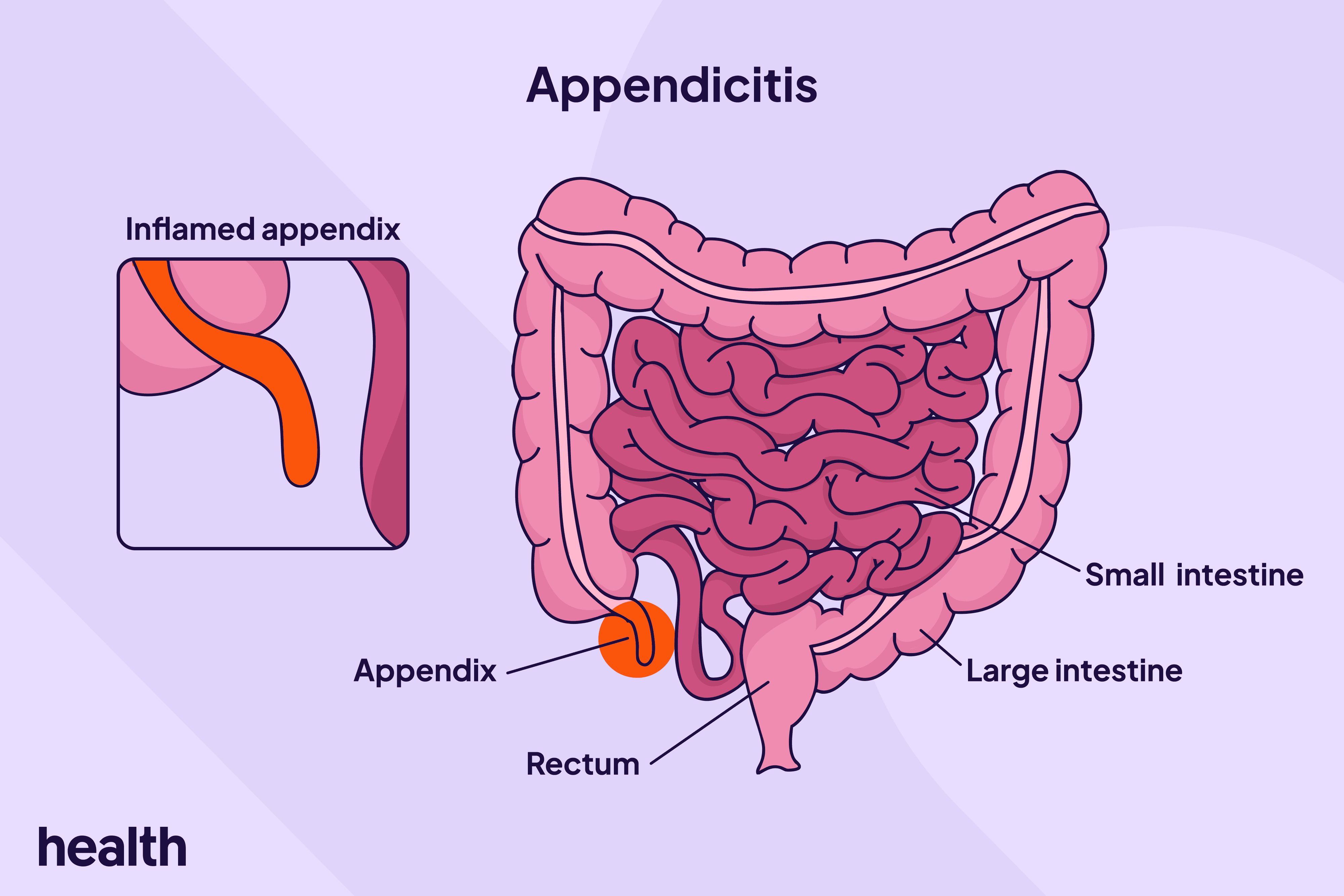
Appendicitis is the inflammation of the appendix, a small pouch attached to the large intestine. It is commonly caused by obstruction of the appendix lumen, which leads to bacterial infection and, if untreated, can result in perforation and serious complications.
🔍 Causes of Appendicitis
The primary trigger is obstruction of the appendix, which allows bacteria to multiply and cause inflammation. Common causes include:
Fecalith – hardened stool blocking the appendix (most common)
Lymphoid hyperplasia – enlarged lymphoid tissue, especially in children and young adults
Rare causes – parasites or tumors
⚠️ Clinical Features
Appendicitis typically presents with a combination of pain, gastrointestinal symptoms, and specific physical signs.
1. Pain (Classic Pattern)
Begins as periumbilical pain (around the navel)
Migrates to the right lower quadrant (RLQ), often localized at McBurney’s point
2. Associated Symptoms
Nausea and vomiting
Loss of appetite (anorexia)
Low-grade fever
3. Physical Signs
RLQ tenderness
Rebound tenderness indicating peritoneal irritation
Guarding – involuntary abdominal muscle contraction
Special Signs
Rovsing’s sign: RLQ pain when the left lower quadrant (LLQ) is pressed
Psoas sign: Pain when extending the hip
Obturator sign: Pain on internal rotation of a flexed hip
🧪 Investigations
Accurate diagnosis often combines laboratory tests and imaging:
Full blood count (FBC): Leukocytosis (high white blood cells)
Urinalysis: To exclude urinary tract infection
Ultrasound: First-line imaging, especially in children and pregnant women
CT scan: Most accurate, used when the diagnosis is unclear
🚨 Complications
If untreated, appendicitis can lead to:
Perforation, causing peritonitis
Abscess formation
Sepsis – potentially life-threatening systemic infection
💊 Management
1. Initial Care
Intravenous (IV) fluids
Analgesics for pain
Antibiotics (e.g., ceftriaxone + metronidazole)
2. Definitive Treatment
Appendectomy – surgical removal of the appendix
Can be open or laparoscopic
⚡ Key Points for Exams and Clinical Practice
Pain migration from the periumbilical area to RLQ is a key diagnostic clue
Anorexia is a common early symptom
Always rule out alternative diagnoses in females:
Ectopic pregnancy
Urinary tract infection (UTI)
Gastroenteritis
🧠 Quick Mnemonic: “MANTRELS”
Migration of pain
Anorexia
Nausea/vomiting
Tenderness in RLQ
Rebound pain
Elevated temperature
Leukocytosis
Shift to left (increase)
🔍 Causes of Appendicitis
The primary trigger is obstruction of the appendix, which allows bacteria to multiply and cause inflammation. Common causes include:
Fecalith – hardened stool blocking the appendix (most common)
Lymphoid hyperplasia – enlarged lymphoid tissue, especially in children and young adults
Rare causes – parasites or tumors
⚠️ Clinical Features
Appendicitis typically presents with a combination of pain, gastrointestinal symptoms, and specific physical signs.
1. Pain (Classic Pattern)
Begins as periumbilical pain (around the navel)
Migrates to the right lower quadrant (RLQ), often localized at McBurney’s point
2. Associated Symptoms
Nausea and vomiting
Loss of appetite (anorexia)
Low-grade fever
3. Physical Signs
RLQ tenderness
Rebound tenderness indicating peritoneal irritation
Guarding – involuntary abdominal muscle contraction
Special Signs
Rovsing’s sign: RLQ pain when the left lower quadrant (LLQ) is pressed
Psoas sign: Pain when extending the hip
Obturator sign: Pain on internal rotation of a flexed hip
🧪 Investigations
Accurate diagnosis often combines laboratory tests and imaging:
Full blood count (FBC): Leukocytosis (high white blood cells)
Urinalysis: To exclude urinary tract infection
Ultrasound: First-line imaging, especially in children and pregnant women
CT scan: Most accurate, used when the diagnosis is unclear
🚨 Complications
If untreated, appendicitis can lead to:
Perforation, causing peritonitis
Abscess formation
Sepsis – potentially life-threatening systemic infection
💊 Management
1. Initial Care
Intravenous (IV) fluids
Analgesics for pain
Antibiotics (e.g., ceftriaxone + metronidazole)
2. Definitive Treatment
Appendectomy – surgical removal of the appendix
Can be open or laparoscopic
⚡ Key Points for Exams and Clinical Practice
Pain migration from the periumbilical area to RLQ is a key diagnostic clue
Anorexia is a common early symptom
Always rule out alternative diagnoses in females:
Ectopic pregnancy
Urinary tract infection (UTI)
Gastroenteritis
🧠 Quick Mnemonic: “MANTRELS”
Migration of pain
Anorexia
Nausea/vomiting
Tenderness in RLQ
Rebound pain
Elevated temperature
Leukocytosis
Shift to left (increase)