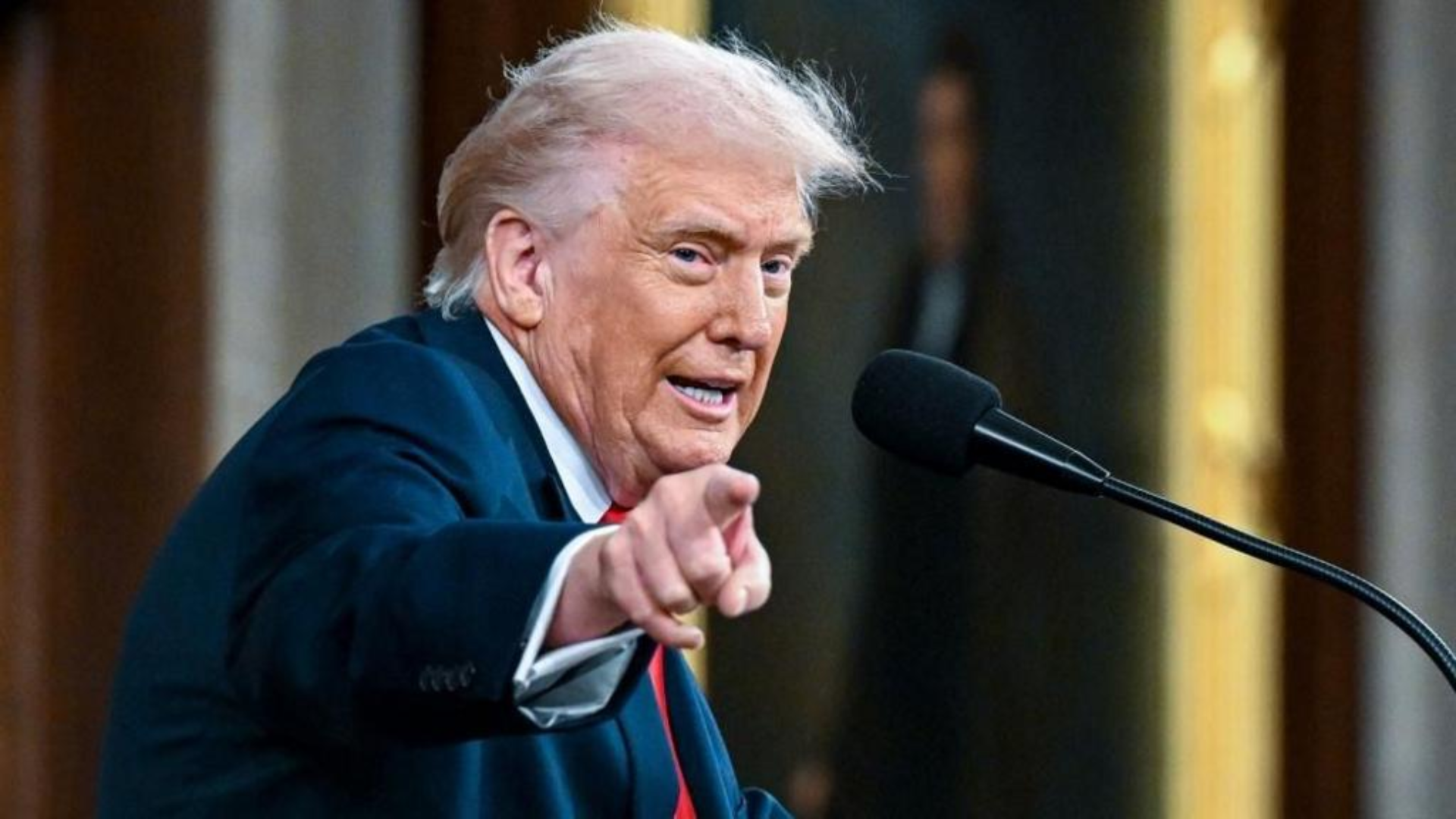
President Donald Trump delivered a 107-minute State of the Union address to a joint session of Congress on February 22, 2026, using the platform to celebrate what he described as an economic and border revival while announcing aggressive new measures against fraud, voter fraud and illegal immigration.
Speaking from the House chamber, Trump opened with a triumphant tone, pointing to what he called historic achievements in his first year back in office. “We have the lowest inflation in decades at 1.7 percent,” Trump said. “Gas is under $2.30 a gallon across most of the country. And for nine straight months, we have had zero illegal border crossings. Zero. That’s never happened before.” He credited the results to strict enforcement, energy independence policies and what he described as a return to common-sense leadership.
The President invited several guests to illustrate the human impact of his policies and the failures of previous administrations. Among them was 5-year-old Dalilah Coleman from Minnesota, who was seriously injured when an illegal immigrant truck driver struck her family’s vehicle. Trump used her story to call for a new “Delilah Law” that would impose harsher penalties on undocumented immigrants who commit violent crimes. “This beautiful little girl should never have had to suffer because our borders were open,” Trump said as Dalilah sat with her family in the gallery. “We will never let this happen again.”
Trump then turned his attention to what he called massive fraud schemes, singling out Minnesota’s Somali community and accusing them of orchestrating $19 billion in fraud, primarily through welfare and health-care programs. “We are launching a war on fraud, and Vice President JD Vance will lead it,” Trump declared. “We will root out every dollar stolen from hardworking American taxpayers.” The remark prompted an immediate outburst from Rep. Ilhan Omar, who shouted back from her seat, leading to brief disorder before order was restored.
The President renewed his push for the Safeguard American Voter Eligibility (SAVE) Act, which would require proof of citizenship for voter registration. “Every American deserves to know their vote is not cancelled by an illegal vote,” Trump said. “The SAVE Act will make sure only citizens vote in our elections. It’s common sense.”
Trump honored several individuals he described as American heroes. Coast Guard swimmer Scott Ruskin was recognised for rescuing passengers from a capsized boat off the Florida coast. “This is the kind of courage that makes America great,” Trump said as Ruskin stood to applause.
The address was briefly interrupted before it began when Rep. Al Green was ejected from the chamber for protesting during the President’s entrance. House Speaker Mike Johnson ordered Green’s removal after he repeatedly shouted objections, drawing cheers from Republicans and boos from Democrats.
Throughout the speech, partisan tensions were evident. Democrats frequently sat in silence or shook their heads during Trump’s claims of economic success and border security, while Republicans rose repeatedly for standing ovations. Trump made no direct mention of his 2024 election victory or the controversies surrounding it, focusing instead on policy wins and future plans.
On the economy, Trump touted job growth in manufacturing, energy production and small businesses, claiming his administration had reversed “decades of decline.” He promised continued tax cuts for middle-class families, deregulation to unleash energy production and tariffs on foreign goods to protect American workers.
The President also touched on foreign policy, vowing to end the war in Ukraine through negotiation and warning Iran and China against aggression. “America is back, stronger than ever,” Trump concluded. “We will make our country safe, prosperous and respected again.”
The 107-minute address was one of the longest State of the Union speeches in modern history, reflecting Trump’s preference for extended, rally-style delivery even in formal settings. Democrats issued rebuttals immediately after, with several accusing the President of exaggeration and division.
As the 2026 midterm election cycle begins, the speech is likely to serve as a blueprint for Republican messaging on the economy, border security and anti-fraud initiatives while deepening partisan divides.