 Diana Muthini
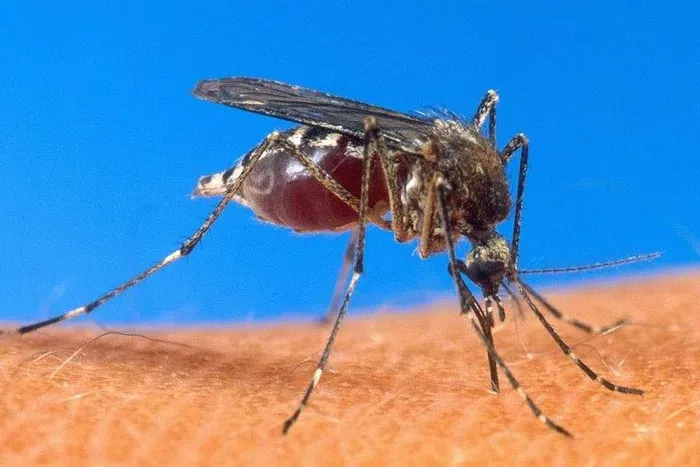
In the heart of Kirinyaga County lies Mwea, a region famous for its sprawling, emerald-green rice paddies and the aromatic pishori rice that feeds much of Kenya. However, these days, the talk in the market centers and village squares isn't about the harvest—it’s about a relentless, airborne invasion. The rhythmic sounds of the night have shifted from a peaceful rural lull to a persistent, high-pitched drone that signals a growing humanitarian and health crisis.
What was once a manageable seasonal nuisance has transformed into a full-blown "mosquito siege," leaving residents exhausted, anxious, and calling for urgent intervention from health authorities.
A Season Unlike Any Other
While Mwea is no stranger to insects—given that standing water is a prerequisite for rice cultivation—this year has broken all records. Long-time residents, who are well-accustomed to the rhythms of the rainy season, say the current surge is "unusual" and far more severe than anything they have navigated in the past.
"We have never seen mosquitoes like this. They are very many this time," one resident shared, echoing a sentiment felt across the plains. This isn't just a matter of a few itchy welts; it is a crisis of public health and economic productivity. When an entire community is robbed of sleep, the effects ripple through every facet of daily life. Farmers, the backbone of the region’s economy, are finding themselves too fatigued to tend to their paddies. Meanwhile, in classrooms across the county, teachers report children struggling to stay awake, their concentration broken by nights spent swatting away insects.
The sheer volume of the insects has outpaced traditional methods of control. Even in homes equipped with nets and coils, families report that the sheer "army" of mosquitoes seems to find every microscopic gap, turning every evening into a desperate battle for comfort and safety.
The Science of the Swarm
Gathered at a local hotel to discuss the phenomenon, residents Peter Wainaina, John Munene, and Michael Kamau shared their observations of the crisis. While they have been informed by researchers that the mosquitoes themselves aren't necessarily "more harmful" in terms of new toxins or mutated venom, the sheer quantity makes the threat of Malaria feel more immediate than ever.
It is a terrifying numbers game. A higher density of mosquitoes leads to a higher frequency of bites. Statistically, as the number of bites per person increases, so does the probability of a malaria parasite being transmitted. Furthermore, traditional prevention methods like indoor residual spraying (IRS) face a "saturation point" where they cannot keep up with the sheer influx of new insects coming from the breeding grounds.
Protecting the Most Vulnerable
The fear gripping Mwea is rooted in a painful reality. National health data consistently reminds the public that malaria is a primary cause of morbidity in the region. The most heart-wrenching aspect of this surge is the danger it poses to the youth. In Kenya, children under the age of five remain the most vulnerable to the complications of the disease.
For a parent in Kirinyaga, that "buzz" in the corner of a dark room isn't just an annoyance—it’s the sound of a potential threat to their child’s life. The psychological toll of this constant vigilance is beginning to show, as mothers and fathers spend their meager earnings on extra aerosols and repellent creams, often at the expense of other household necessities.
A Call for Mobilization: Prevention as a Shield
Despite the alarming surge, health experts and the World Health Organization maintain a steadfast message: Malaria remains one of the most preventable diseases in the world. However, prevention in a landscape like Mwea requires more than just individual effort; it requires a coordinated, multi-pronged strategy:
- Integrated Vector Management: There is an urgent need for clearing drainage systems and managing water levels in rice paddies. Disrupting the breeding cycles at the source is the only way to lower the overall population of the swarm.
- Strengthening the Safety Net: Ensuring every household, regardless of income, has access to high-quality, long-lasting insecticidal nets (LLINs).
- Rapid Response and Awareness: Strengthening local clinics so that they are stocked with diagnostic kits and anti-malarial medication. Community awareness is vital—locals must be encouraged to seek medical attention the moment symptoms like fever, chills, or joint pain appear.
Waiting for the Dawn
As the rainy season continues to dampen the earth, the people of Mwea are looking toward both the Kirinyaga County Government and national health agencies to bolster mosquito control measures and perhaps initiate large-scale fumigation programs.
Until then, the residents continue their nightly vigil. They are a community under siege, united by the hope that the buzz will eventually fade, and they can finally return to the peaceful, restorative sleep that every human being deserves.
"It's not just about the itch anymore," one farmer noted while looking out over his fields. "It's about the fear of what comes after the bite. We just want our nights back."