The Judicial Service Commission has published the names of six candidates who have applied to fill the Supreme Court vacancy created by the death of Justice Mohamed Khadhar Ibrahim on December 17, 2025.
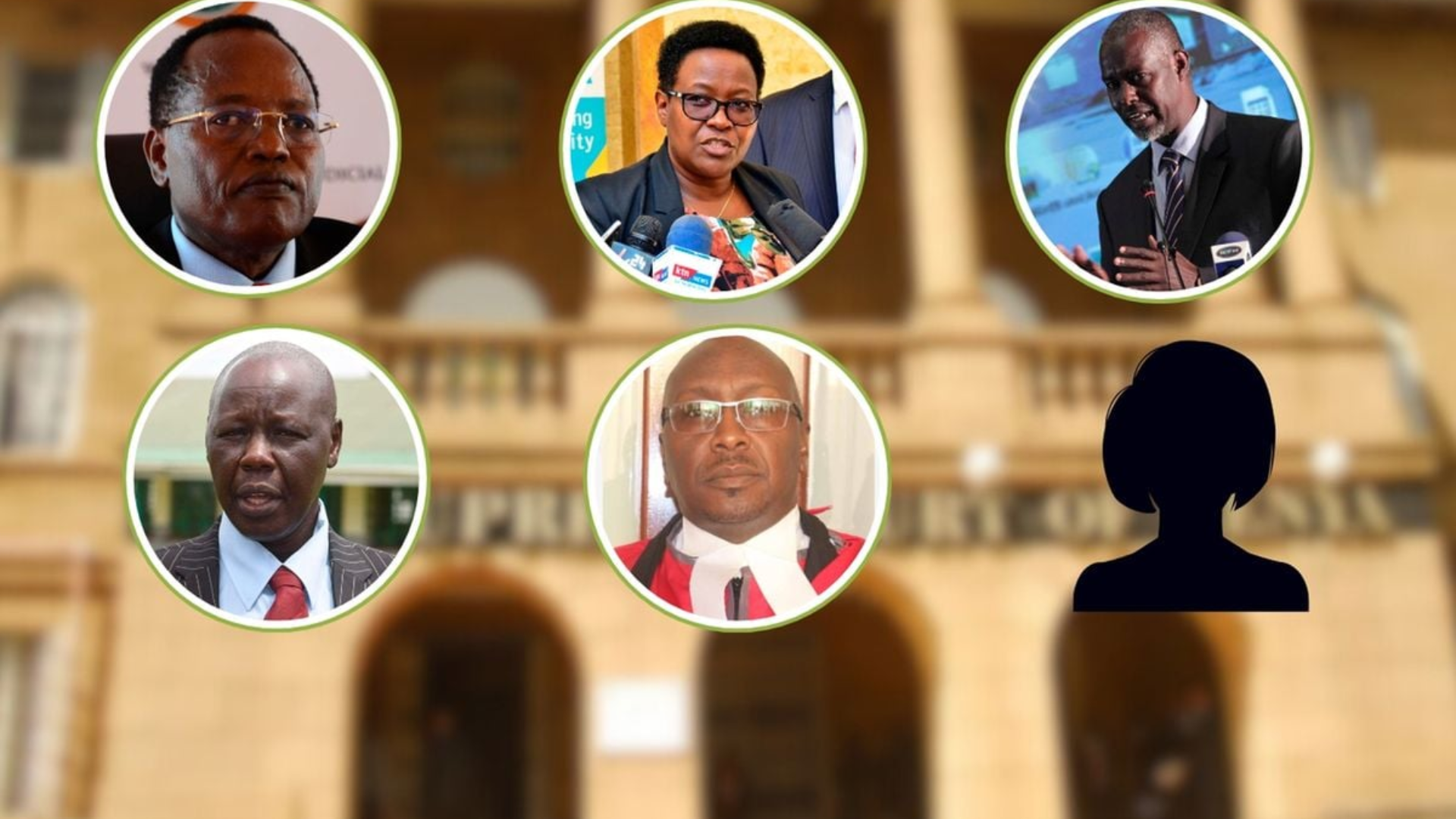
The list, released on February 25, 2026, comprises four sitting judges from the Court of Appeal—Joseph Kiplagat Sergon, Warsame Abdullahi Mohammed, Joseph Kipchumba Kigen Katwa and Francis Kipruto Tuiyott—together with Chief Magistrate Anne Waceke Kiratu Makori and advocate Lilian Wanjiku Wachira. The JSC invited the public to submit memoranda on the applicants’ suitability by March 10, ahead of a stakeholder forum scheduled for March 23, 2026, where shortlisting will be finalised before interviews and recommendations to the President.
The vacancy has drawn immediate public and professional attention given the Supreme Court’s pivotal role in constitutional interpretation, presidential election petitions and matters of national importance. Online debate has been particularly intense around the inclusion of Justice Katwa, who was elevated to the Court of Appeal only recently. Critics, including lawyer Miguna Miguna and Law Society of Kenya President Nelson Havi, have questioned whether a judge with limited appellate bench experience should be considered for the apex court so soon.
“Katwa’s application is premature and raises questions about the depth of experience required at the Supreme Court,” Havi posted online. “The JSC must prioritise judges who have demonstrated sustained excellence over many years on the bench, not those whose elevation is still fresh.”
Miguna Miguna echoed the sentiment, arguing that rapid progression could undermine public confidence in judicial appointments. “The Supreme Court is not a training ground,” Miguna wrote. “It requires proven intellectual rigour, independence and a long track record of handling complex constitutional matters.”
Defenders of the process have countered that the JSC advertises vacancies openly and considers all qualified applicants without imposing arbitrary minimum years on the bench. One legal scholar noted that Justice Katwa applied for the vacancy concurrently with his Court of Appeal appointment, and the JSC is entitled to evaluate his overall record, including his time as a High Court judge and prior experience as a litigator and academic.
The inclusion of Chief Magistrate Anne Makori and advocate Lilian Wachira has also generated discussion. Makori brings extensive trial court experience and a reputation for diligence in criminal and commercial matters, while Wachira, a private practitioner, offers a non-judicial perspective that could diversify the court’s composition. Both are seen as long shots compared to the appellate judges but represent the JSC’s commitment to broad consultation.
JSC Secretary Geoffrey Mwangi said the commission will conduct thorough background checks, public participation and interviews before recommending names to the President. “The Supreme Court demands the highest calibre of judicial officers,” Mwangi said. “We will listen carefully to all views expressed during the stakeholder forum and in written submissions. Our duty is to recommend individuals of integrity, competence and independence who can uphold the Constitution.”
The vacancy has added urgency to preparations for potential 2027 presidential election petitions, as the Supreme Court is the final arbiter in such disputes. Legal analysts say the court’s current strength of six judges (after Ibrahim’s death) is below the constitutional minimum of seven for full-bench hearings, though acting judges can be appointed in exceptional circumstances.
The JSC has urged stakeholders to submit memoranda by March 10, focusing on the applicants’ judicial temperament, intellectual depth, impartiality, integrity and understanding of Kenya’s constitutional framework. The March 23 forum will provide an opportunity for bar associations, civil society, academia and the public to engage directly with the process.
As the vetting unfolds, the debate over experience, timing and diversity is likely to continue shaping public perception of the appointments. Whoever is ultimately nominated and approved will join a court that remains central to Kenya’s constitutional democracy.