 Diana Muthini
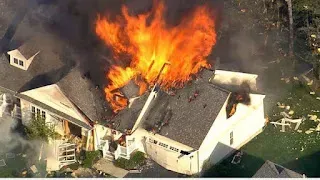
In a tragedy that has sent waves of fear, grief, and disbelief across the nation, a senior government official tasked with safeguarding national security has lost his life following a violent and highly targeted attack at his own residence. The incident, as shocking as it is symbolic, has shaken public confidence and ignited urgent conversations about safety, intelligence failures, and the evolving nature of modern threats.
It was a calm, ordinary morning—one that gave no warning of the horror that was about to unfold. Residents in the quiet neighborhood recall hearing a thunderous explosion that shattered the stillness, followed by thick black smoke rising aggressively into the sky. Windows rattled, alarms screamed, and within moments, panic spread like wildfire.
The official’s home, once a symbol of stability and authority, quickly became a scene of chaos and destruction. Flames tore through sections of the building, consuming everything in their path. Emergency responders rushed in with urgency, sirens piercing through the confusion, as firefighters battled to contain the blaze while security forces secured the area.
Eyewitnesses describe a scene that felt almost unreal—people running for safety, others frozen in shock, and the overwhelming sound of crackling fire mixed with distant cries. Some neighbors attempted to help before being pushed back by security personnel who quickly established a perimeter, fearing further danger.
Initial reports indicate that the attack may have been carefully planned, targeting the official at a time when he was believed to be inside his residence. While authorities have yet to release full details, the nature of the explosion suggests a deliberate act intended not just to harm, but to send a message—one that has now echoed across the country and beyond.
The loss of such a high-ranking figure is not only a personal tragedy for his family but also a significant blow to the nation’s leadership structure. Known for his firm stance on defence and security matters, the fallen official was regarded as a pillar of strength within government. His leadership style was defined by discipline, strategy, and a deep commitment to national stability.
Colleagues remember him as a decisive thinker, a calm voice in times of crisis, and a man who carried the weight of responsibility with unwavering determination. Under his watch, several key security initiatives had been implemented, aimed at strengthening the country’s ability to respond to both internal and external threats.
Now, in the wake of his sudden death, questions loom large. How could such an attack penetrate layers of security? Were there warning signs that were missed? And most importantly, who is behind this calculated act?
Government officials have moved quickly to address the nation, calling for calm while assuring citizens that a full-scale investigation is underway. Security has been heightened across major installations, with intelligence agencies working around the clock to piece together evidence and track down those responsible.
Political leaders from across the spectrum have condemned the attack in the strongest terms, describing it as an assault not just on an individual, but on the nation itself. Messages of condolence have poured in from both local and international leaders, highlighting the gravity of the situation and the global concern it has sparked.
Meanwhile, citizens are left grappling with a mix of emotions—fear, anger, sadness, and uncertainty. Social spaces are flooded with reactions, as people demand answers and accountability. Many are questioning whether enough is being done to protect not just leaders, but ordinary citizens as well.
Security experts warn that such incidents reflect a changing landscape, where threats are becoming more unpredictable and sophisticated. They emphasize the need for stronger intelligence networks, improved coordination among agencies, and a proactive approach to identifying risks before they escalate into tragedy.
As investigations continue, the scene of the attack stands as a haunting reminder of the fragility of safety. The charred remains of the residence, the lingering smell of smoke, and the heavy presence of security forces paint a picture that will not easily fade from memory.
For the family of the fallen leader, the loss is deeply personal—a life cut short in the most violent and unexpected way. For the nation, it is a moment of reckoning, one that demands reflection, unity, and decisive action.
Yet even in the face of such darkness, there is a growing sense of resilience. Citizens, leaders, and institutions alike are being called upon to stand together, to reject fear, and to reaffirm their commitment to peace and stability.
Because while this attack may have shaken the nation, it has also awakened something powerful—a collective determination to rise above fear, to seek justice, and to ensure that such a tragedy is never allowed to happen again.
As the country mourns and the world watches, one truth remains clear: this is not just a story of loss—it is a defining moment, one that will shape the future of national security, leadership, and unity for years to come.