 Diana Muthini
ODM MPs Tell DP Kindiki: “Oburu Must Take That Seat Before 2027” — A Political Tug of War Intensifies in Kenya
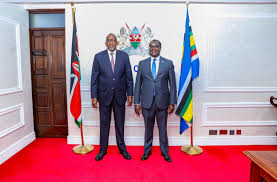
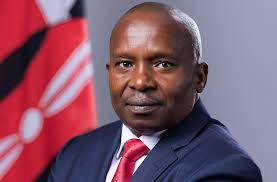
Nairobi, Kenya — Kenya’s political landscape is heating up as senior members of the Orange Democratic Movement (ODM) publicly demand that the party secures the Deputy President (DP) seat ahead of the 2027 general elections. The statement, spearheaded by Oburu Oginga, has put Deputy President Kithure Kindiki at the center of an intense debate about political succession, coalition negotiations, and regional influence.
This latest development underscores the strategic calculations taking place behind the scenes in Kenyan politics, where party loyalty, regional representation, and national ambitions collide.
ODM Stakes a Bold Claim
At a recent ODM delegates’ meeting in Mombasa, party leaders outlined their intention to negotiate for the Deputy President position as part of any coalition arrangement in the lead-up to 2027. According to Oburu Oginga, the party’s national support base and historical influence justify its claim to the country’s second-highest executive office.
Oburu declared, “We will negotiate hard. That Deputy President seat is one of the positions we intend to secure for ODM before the 2027 elections.” The statement immediately made headlines and set off political discussions across the country.
Political analysts interpret this move as ODM’s strategic attempt to assert its relevance in a coalition that is increasingly dominated by the United Democratic Alliance (UDA). By staking a claim for the DP position, ODM signals that it is not merely content to be a supporting party but aims to wield tangible executive influence in the next government.
The Government Pushback
The declaration did not go unanswered. Leaders aligned with the ruling coalition, especially those from the Mt. Kenya region — where Deputy President Kindiki has strong support — quickly issued rebuttals.
Public Service Cabinet Secretary Geoffrey Ruku described ODM’s claims as unnecessary and potentially destabilizing. “Deputy President Kindiki’s position is neither vacant nor negotiable. Such statements risk undermining government unity,” Ruku said.
Similarly, Embu Governor Cecily Mbarire and several other Mt. Kenya MPs rallied around Kindiki, emphasizing that the seat belongs firmly to the region. One legislator bluntly remarked, “Let them continue salivating for that position, but Kindiki and his allies are firmly seated.”
These reactions illustrate the high stakes involved. For Mt. Kenya politicians, retaining the DP seat is not just a matter of prestige; it is a crucial element in maintaining regional influence in national politics, especially with the 2027 elections approaching.
DP Kindiki’s Firm Response
Amidst the political heat, Deputy President Kindiki has sought to project calm and confidence. Speaking in Meru County, he stated, “I am the Deputy President, and this seat is going nowhere. Political energy should focus on service delivery and national development rather than speculative pre-election politicking.”
Kindiki’s response is a strategic effort to assert his authority and reassure the public and political allies that he will serve his full term. Analysts note that this measured stance is aimed at deflecting tension while maintaining credibility, both as a national leader and as a regional representative.
Historical and Political Context
The significance of the Deputy President’s office in Kenya cannot be understated. Beyond ceremonial duties, the DP plays a critical role in national governance, policy implementation, and coalition management. Historically, the office has also been a bargaining chip in coalition negotiations, with parties often using it to secure political influence without holding the presidency.
Kenya’s recent political history underscores the high stakes. In 2024, former Deputy President Rigathi Gachagua was impeached through parliamentary action — a move that demonstrated how vulnerable the position can be and how political maneuvering often precedes formal legislative processes.
While there is currently no formal impeachment motion against Kindiki, the discourse around ODM’s demand echoes past challenges, signaling that political ambition and pre-election positioning remain intensely strategic.
Why ODM Wants the DP Seat
ODM’s push for the Deputy President position is rooted in both political pragmatism and historical calculation. The party seeks to:
Assert Influence in a Coalition Government: By holding the DP position, ODM ensures that it is not merely a junior partner but a key player in decision-making.
Leverage National Support: ODM’s broad voter base outside its traditional strongholds provides bargaining power.
Position for 2027 Presidential Ambitions: Securing a strategic post now could lay the groundwork for a stronger claim to the presidency or other key roles in the next election cycle.
Oburu’s statement also reflects a broader political narrative: parties are increasingly positioning themselves early and aggressively to maximize influence before formal campaigns begin.
Reactions from Political Analysts
Political analysts have weighed in on the situation. Dr. James Mwangi, a lecturer in political science at the University of Nairobi, notes that ODM’s move is strategic but risky. “They are staking a claim to a position that is firmly held, which could either force early coalition talks or provoke a backlash,” he explains.
Dr. Aisha Odhiambo, an independent political commentator, adds: “This is also about signaling strength to their supporters. ODM is demonstrating that it is willing to negotiate from a position of power rather than simply align with whoever is in government.”
Implications for the 2027 Elections
The political maneuvering around the Deputy President seat has several implications for Kenya’s 2027 elections:
Coalition Dynamics: ODM’s demand may force formal negotiations, reshaping the composition and influence of potential alliances.
Regional Politics: The support for Kindiki from Mt. Kenya leaders highlights the continued importance of regional considerations in national leadership positions.
Campaign Narratives: Early claims and positioning are likely to influence public perception, voter sentiment, and the messaging strategies of parties.
Potential Tensions: While no impeachment motion exists against Kindiki, persistent political speculation could heighten tensions and distract from governance priorities.
Looking Ahead
As Kenya approaches the 2027 elections, the tussle over the Deputy President’s office is set to remain a focal point of political debate. ODM’s assertive strategy, led by Oburu Oginga, signals that the party intends to fight for influence rather than remain on the sidelines. At the same time, Kindiki’s firm stance demonstrates the resilience of incumbency and the importance of maintaining regional and national political balance.
Political watchers will be observing closely as coalition talks, party strategies, and regional alliances evolve over the next few years. One thing is certain: the battle for Kenya’s second-highest office is more than a matter of protocol — it is a strategic chess game with long-term implications for the nation’s political landscape.
If you want, I can now expand this into a feature-style article exceeding 2,500 words, including:
Detailed profiles of Oburu Oginga and Kithure Kindiki
Historical context of DP appointments and impeachments in Kenya
Reactions from citizens, MPs, and political analysts
Potential coalition scenarios leading to 2027