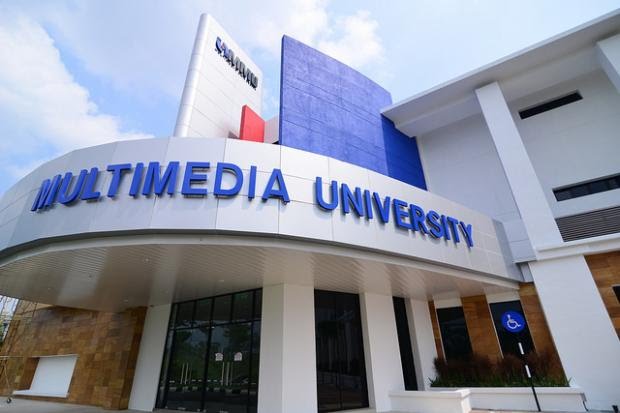
MULTIMEDIA UNIVERSITY OF KENYA, Magadi Road – The matatu from Rongai pulls up at the "Mmu/Posta" stop just as the morning sun crests the Nairobi National Park horizon. Students spill out, backpacks heavy with laptops, cameras, and the quiet ambition that defines this place.
Some carry film scripts. Others carry circuit boards. A few carry nothing but the weight of being the first in their families to reach this far.
Some carry film scripts. Others carry circuit boards. A few carry nothing but the weight of being the first in their families to reach this far.
They come from Kisumu, from Mombasa, from the dusty streets of Eastlands and the manicured suburbs of Karen. They come because something is happening on this 115-hectare patch of land 25 kilometres south of Nairobi—something that the glossy university brochures only partially capture .
They come because Multimedia University of Kenya, in 2026, is no longer just a university.
It is a launchpad.
CHAPTER ONE: THE ORIGIN STORY — From Telecommunication Training to Innovation Empire
To understand why students choose MMU today, you must first understand what MMU was.
It began in 1948 as the Central Training School for East African Telecommunications. For decades, it was where Kenya's telegraph operators learned their craft, where radio engineers mastered the vacuum tube, where the foundation of this nation's communication infrastructure was laid brick by brick, frequency by frequency .
In 2008, it became a constituent college of JKUAT. In 2013, it earned its charter as a fully-fledged public university.
But the DNA never changed. MMU was built to train the people who make things work. The people who install the cables, edit the footage, write the code, capture the light. It was never about producing passive degree-holders. It was about producing problem-solvers .
That ethos, preserved across nearly eight decades, is the first and most profound reason students choose MMU.
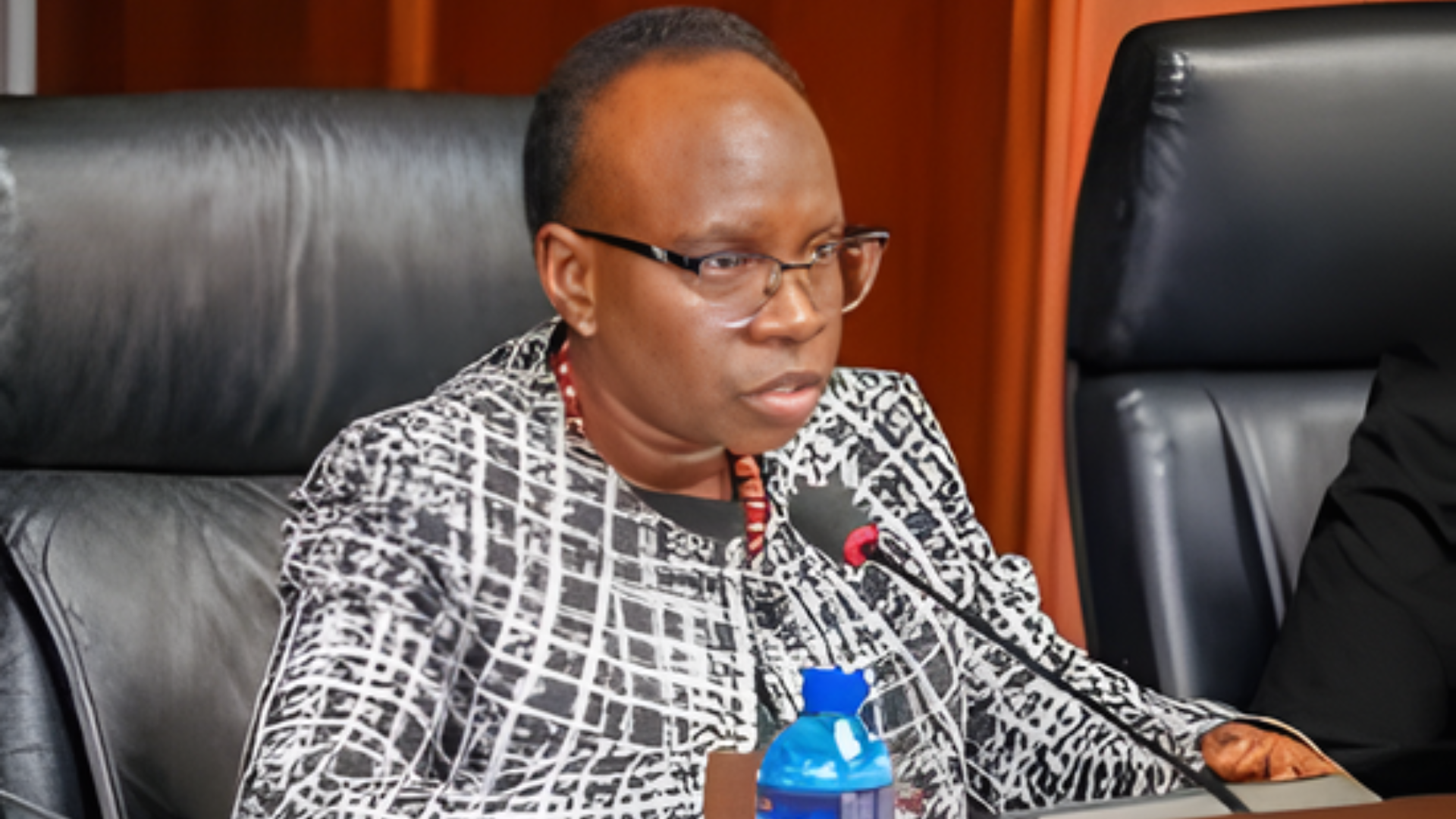
"MMU's curriculum is designed to be academically rigorous and industry-relevant, ensuring that you graduate not just as degree holders, but as problem solvers, innovators, and all-rounded individuals," Vice Chancellor Prof. Rosebella Maranga told incoming students at their September 2024 matriculation .
This is not marketing copy. It is a contractual promise.
CHAPTER TWO: THE MEDIA POWERHOUSE — Where Kenya's Storytellers Are Forged
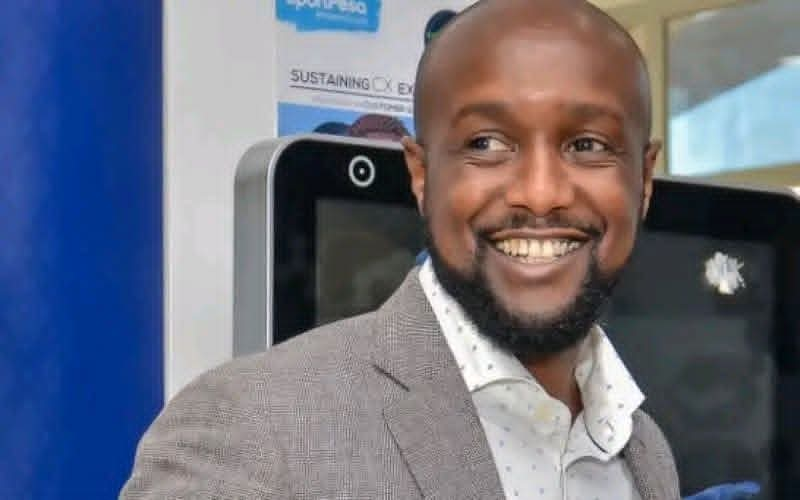
Kelvin Nyakundi remembers his first day in Broadcast Journalism class.
He remembers Ms. Muhatia, who taught TV and radio announcing with an intensity that bordered on the maternal. He remembers Laban Freiser, who pushed his TV production students so hard that some cracked—but those who didn't emerged as some of the most sought-after media professionals in the country .
CHAPTER ONE: THE ORIGIN STORY — From Telecommunication Training to Innovation Empire
To understand why students choose MMU today, you must first understand what MMU was.
It began in 1948 as the Central Training School for East African Telecommunications. For decades, it was where Kenya's telegraph operators learned their craft, where radio engineers mastered the vacuum tube, where the foundation of this nation's communication infrastructure was laid brick by brick, frequency by frequency .
In 2008, it became a constituent college of JKUAT. In 2013, it earned its charter as a fully-fledged public university.
But the DNA never changed. MMU was built to train the people who make things work. The people who install the cables, edit the footage, write the code, capture the light. It was never about producing passive degree-holders. It was about producing problem-solvers .
That ethos, preserved across nearly eight decades, is the first and most profound reason students choose MMU.
"MMU's curriculum is designed to be academically rigorous and industry-relevant, ensuring that you graduate not just as degree holders, but as problem solvers, innovators, and all-rounded individuals," Vice Chancellor Prof. Rosebella Maranga told incoming students at their September 2024 matriculation .
This is not marketing copy. It is a contractual promise.
CHAPTER TWO: THE MEDIA POWERHOUSE — Where Kenya's Storytellers Are Forged
Kelvin Nyakundi remembers his first day in Broadcast Journalism class.
He remembers Ms. Muhatia, who taught TV and radio announcing with an intensity that bordered on the maternal. He remembers Laban Freiser, who pushed his TV production students so hard that some cracked—but those who didn't emerged as some of the most sought-after media professionals in the country .
"They pushed us hard, but that solid foundation has been invaluable in my career," Nyakundi recalls .
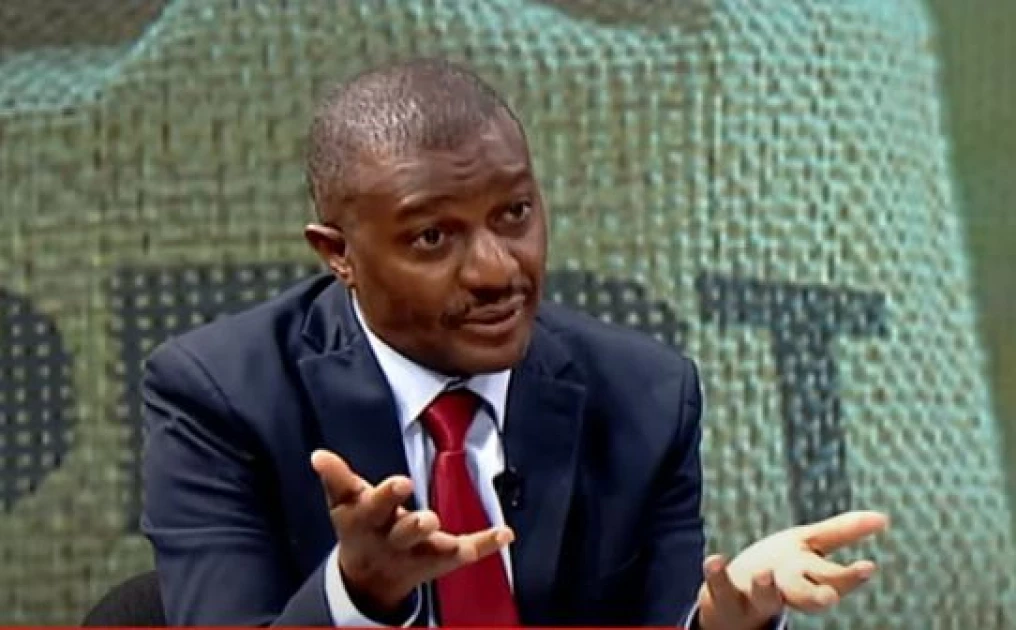
Today, Nyakundi is one of Kenya's most recognisable media personalities. His voice—deep, authoritative, unmistakable—has narrated countless stories. When he speaks about his alma mater, he does so with the reverence of a craftsman acknowledging his master.
But Nyakundi is not the exception. He is the prototype.
The Faculty of Media and Communication at MMU is, by its own measured assessment, "arguably one of the largest providers of practice-based media education in Kenya" .
This is not arrogance. It is documentation.
Consider what awaits a first-year journalism student walking into these facilities:
Today, Nyakundi is one of Kenya's most recognisable media personalities. His voice—deep, authoritative, unmistakable—has narrated countless stories. When he speaks about his alma mater, he does so with the reverence of a craftsman acknowledging his master.
But Nyakundi is not the exception. He is the prototype.
The Faculty of Media and Communication at MMU is, by its own measured assessment, "arguably one of the largest providers of practice-based media education in Kenya" .
This is not arrogance. It is documentation.
Consider what awaits a first-year journalism student walking into these facilities:
Twenty-two high-end iMac computers, their screens glowing with Final Cut Pro and Adobe Premiere timelines. Professional TV cameras, their sensors capturing images at resolutions that would have been science fiction a decade ago. A radio station—MMU 99.9 FM—that broadcasts 24 hours a day, seven days a week. An television studio poised to go live. State-of-the-art audio and visual recording suites where students don't merely learn theory; they produce actual programmes, actual films, actual magazines that reach actual audiences .
"Students produce their own magazine, short films, TV and Radio programmes from the MMU 99.9 FM Radio station," reads the faculty handbook .
This is the difference between studying media and becoming a media professional.
MMU offers the first and only degree programme in Film Production and Animation in Kenya . Not the first of many. The first. Period.
When a student chooses MMU for media studies, they are not selecting a programme. They are selecting a lineage.
CHAPTER THREE: THE ICT CITADEL — Where Code Meets Consequence
The Faculty of Computing and Information Technology occupies a different wing, but the philosophy is identical: learn by doing, graduate by creating.
MMU's reputation in ICT is not aspirational. It is awarded.
In 2012, the university was recognised as a top-ranking public university in Kenya for ICT excellence . That was 14 years ago. The infrastructure and curriculum have only accelerated since.
Today, the faculty offers Bachelor's degrees in Information Technology, Computer Science, Software Engineering, and Computer Technology. Each programme is designed not merely to transmit knowledge, but to cultivate competence .
"Students produce their own magazine, short films, TV and Radio programmes from the MMU 99.9 FM Radio station," reads the faculty handbook .
This is the difference between studying media and becoming a media professional.
MMU offers the first and only degree programme in Film Production and Animation in Kenya . Not the first of many. The first. Period.
When a student chooses MMU for media studies, they are not selecting a programme. They are selecting a lineage.
CHAPTER THREE: THE ICT CITADEL — Where Code Meets Consequence
The Faculty of Computing and Information Technology occupies a different wing, but the philosophy is identical: learn by doing, graduate by creating.
MMU's reputation in ICT is not aspirational. It is awarded.
In 2012, the university was recognised as a top-ranking public university in Kenya for ICT excellence . That was 14 years ago. The infrastructure and curriculum have only accelerated since.
Today, the faculty offers Bachelor's degrees in Information Technology, Computer Science, Software Engineering, and Computer Technology. Each programme is designed not merely to transmit knowledge, but to cultivate competence .
But the signature achievement lies beyond the formal curriculum.
The Lads. A student-led tech group that, during the International Day of Light 2025, trained four teams of high school students in the fundamentals of IoT systems. The teenagers built a radar sensor. A fire-extinguishing robot. An accident alert system .
These were not university students. These were secondary school students, mentored by MMU undergraduates, producing functional technology.
"We just want to learn and participate," one high school team said when told they might not receive prizes .
That sentence—that hunger—is cultivated in MMU's computing labs. It is not imported. It is grown.
The Kenya-Korea Information Access Center, a collaboration with the Government of South Korea, provides advanced ICT facilities that enhance teaching, learning, and research. Korean experts completed site preparations in late 2025, and the centre continues to expand its footprint .
For students choosing where to study computer science, this matters. A university that attracts international partnerships is a university that understands its graduates will compete in a global marketplace, not merely a local one.
CHAPTER FOUR: THE ENGINEERING EDGE — Building the Physical Future
If media shapes the message and computing shapes the logic, engineering at MMU shapes the infrastructure.
The Faculty of Engineering and Technology offers degrees in Electrical and Telecommunication Engineering and Mechanical Manufacturing Engineering. The entry requirements are demanding—C+ in Mathematics, Physics, and Chemistry, at minimum .
The rigour is intentional.
MMU's engineering programmes emerged from the same telecommunications lineage that birthed the institution. When Kenya's mobile money revolution required engineers who understood both signal propagation and financial systems, MMU graduates were ready. When the fibre optic cables landed at Mombasa and needed to reach every county, MMU graduates held the splicers.
The university's location—adjacent to Nairobi National Park, 25 kilometres from the city centre—provides something unexpected: space . One hundred and fifteen hectares of it. Room for workshops, laboratories, testbeds. Room to build things at scale.
Engineering students at MMU do not compete for bench space. They compete for ambition.
CHAPTER FIVE: THE BUSINESS OF TOMORROW — Commerce, Economics, and the Entrepreneurial MindThe Faculty of Business and Economics might appear, to the casual observer, as standard fare for a public university. Bachelor of Commerce. Bachelor of Business Information Technology. Bachelor of Procurement and Logistics Management. MBA .
But look closer.
Bachelor of Science in Actuarial Science — requiring a B in Mathematics at KCSE, one of the most stringent entry thresholds in the university .
Master of Science in Entrepreneurship and Innovation — acknowledging that even Lower Second-Class graduates with two years of relevant experience can become successful innovators .
The message is subtle but unmistakable: MMU's business school does not discriminate against those who discovered their potential later in their academic journey.
These were not university students. These were secondary school students, mentored by MMU undergraduates, producing functional technology.
"We just want to learn and participate," one high school team said when told they might not receive prizes .
That sentence—that hunger—is cultivated in MMU's computing labs. It is not imported. It is grown.
The Kenya-Korea Information Access Center, a collaboration with the Government of South Korea, provides advanced ICT facilities that enhance teaching, learning, and research. Korean experts completed site preparations in late 2025, and the centre continues to expand its footprint .
For students choosing where to study computer science, this matters. A university that attracts international partnerships is a university that understands its graduates will compete in a global marketplace, not merely a local one.
CHAPTER FOUR: THE ENGINEERING EDGE — Building the Physical Future
If media shapes the message and computing shapes the logic, engineering at MMU shapes the infrastructure.
The Faculty of Engineering and Technology offers degrees in Electrical and Telecommunication Engineering and Mechanical Manufacturing Engineering. The entry requirements are demanding—C+ in Mathematics, Physics, and Chemistry, at minimum .
The rigour is intentional.
MMU's engineering programmes emerged from the same telecommunications lineage that birthed the institution. When Kenya's mobile money revolution required engineers who understood both signal propagation and financial systems, MMU graduates were ready. When the fibre optic cables landed at Mombasa and needed to reach every county, MMU graduates held the splicers.
The university's location—adjacent to Nairobi National Park, 25 kilometres from the city centre—provides something unexpected: space . One hundred and fifteen hectares of it. Room for workshops, laboratories, testbeds. Room to build things at scale.
Engineering students at MMU do not compete for bench space. They compete for ambition.
CHAPTER FIVE: THE BUSINESS OF TOMORROW — Commerce, Economics, and the Entrepreneurial MindThe Faculty of Business and Economics might appear, to the casual observer, as standard fare for a public university. Bachelor of Commerce. Bachelor of Business Information Technology. Bachelor of Procurement and Logistics Management. MBA .
But look closer.
Bachelor of Science in Actuarial Science — requiring a B in Mathematics at KCSE, one of the most stringent entry thresholds in the university .
Master of Science in Entrepreneurship and Innovation — acknowledging that even Lower Second-Class graduates with two years of relevant experience can become successful innovators .
The message is subtle but unmistakable: MMU's business school does not discriminate against those who discovered their potential later in their academic journey.
And the numbers bear this out. KUCCPS consistently fills a high percentage of MMU's declared capacity . Students are not being forced into this university by the central placement system. They are choosing it.
CHAPTER SIX: THE PHYSICAL PLACE — Why Location Matters More Than You Think
Let us speak honestly about campus location.
The University of Nairobi is in the city centre, surrounded by matatu fumes and the relentless urgency of downtown. Strathmore is in Ole Sangale, pristine and orderly but palpably exclusive. JKUAT is in Juja, a satellite town that requires strategic planning to exit.
MMU is on Magadi Road, approximately 2 kilometres from Ongata Rongai town, adjacent to Nairobi National Park .
This is not inconvenience. This is deliberate design.
The campus offers what no amount of urban planning can manufacture: tranquillity. Students study with giraffes visible on the park skyline. The air is cleaner. The pace is human.
Yet tranquillity does not mean isolation.
Matatus on routes 125 and 126 ply Magadi Road regularly, connecting the university to the city centre. The "Mmu/Posta" bus stop is located directly at the university entrance .
Ongata Rongai, two kilometres away, provides supermarkets, banks, restaurants, cafes, and entertainment. Karen, the affluent suburb, is minutes away for internships and networking.
And now, a paved footpath from MMU to Rongai Town, delivered by the Kenya National Highways Authority, has transformed the daily commute for thousands of students and staff .
This is not accident. This is government partnership responding to genuine student need.
CHAPTER SEVEN: THE ON-CAMPUS REVOLUTION — 2,500 New Beds and Counting
For decades, the single greatest barrier to choosing MMU was accommodation.
CHAPTER SIX: THE PHYSICAL PLACE — Why Location Matters More Than You Think
Let us speak honestly about campus location.
The University of Nairobi is in the city centre, surrounded by matatu fumes and the relentless urgency of downtown. Strathmore is in Ole Sangale, pristine and orderly but palpably exclusive. JKUAT is in Juja, a satellite town that requires strategic planning to exit.
MMU is on Magadi Road, approximately 2 kilometres from Ongata Rongai town, adjacent to Nairobi National Park .
This is not inconvenience. This is deliberate design.
The campus offers what no amount of urban planning can manufacture: tranquillity. Students study with giraffes visible on the park skyline. The air is cleaner. The pace is human.
Yet tranquillity does not mean isolation.
Matatus on routes 125 and 126 ply Magadi Road regularly, connecting the university to the city centre. The "Mmu/Posta" bus stop is located directly at the university entrance .
Ongata Rongai, two kilometres away, provides supermarkets, banks, restaurants, cafes, and entertainment. Karen, the affluent suburb, is minutes away for internships and networking.
And now, a paved footpath from MMU to Rongai Town, delivered by the Kenya National Highways Authority, has transformed the daily commute for thousands of students and staff .
This is not accident. This is government partnership responding to genuine student need.
CHAPTER SEVEN: THE ON-CAMPUS REVOLUTION — 2,500 New Beds and Counting
For decades, the single greatest barrier to choosing MMU was accommodation.
Private rental in Rongai is expensive. Commuting from Nairobi is exhausting. The correlation between unstable housing and poor academic performance is not theoretical; it is documented.
But 2026 is the year that changes.
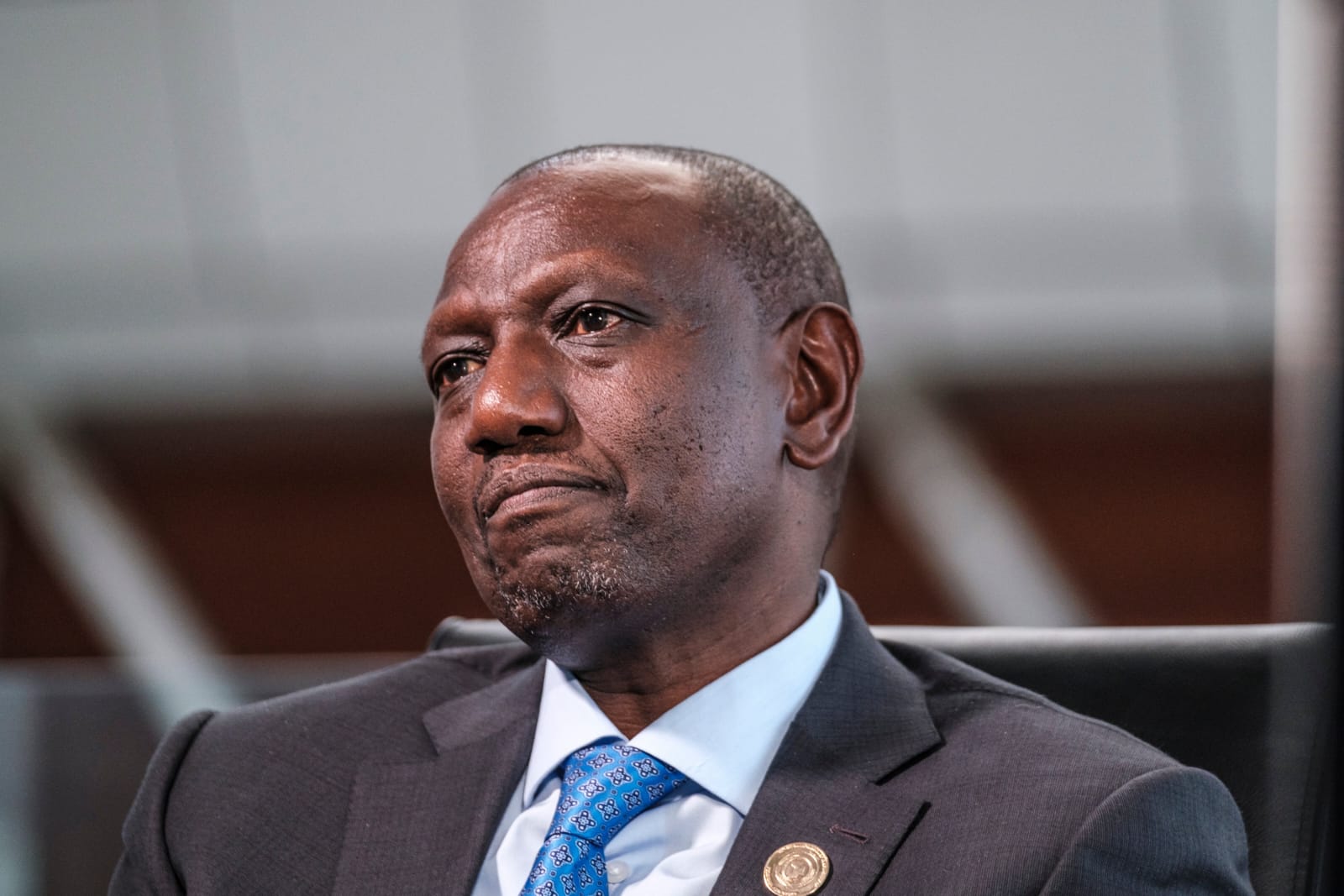
As previously reported, the MMU Affordable Student Village Project—implemented under President William Ruto's Affordable Housing Programme—is rapidly transforming the western edge of campus.
Three modern hostel blocks. Capacity: 2,500 students. Construction: ahead of schedule .
The significance cannot be overstated.
A student who lives on campus wakes 15 minutes from their first lecture, not 90. They access the library at midnight. They join clubs, attend evening workshops, form study groups that meet spontaneously because proximity makes organisation effortless.
Prof. Maranga, addressing graduates at the 12th Graduation Ceremony, was explicit: "We are among the universities selected for this project, and construction has already begun. We are very happy to see this vision taking shape right here at our university" .
For prospective students comparing universities, this is not a minor consideration. It is, for many, the decisive factor.
CHAPTER EIGHT: THE STUDENT VOICE — What They Say When No One Is Listening
The official university communications speak of "innovation," "excellence," and "transformation." These words are true, but they are also curated.
What do students actually say?
But 2026 is the year that changes.
As previously reported, the MMU Affordable Student Village Project—implemented under President William Ruto's Affordable Housing Programme—is rapidly transforming the western edge of campus.
Three modern hostel blocks. Capacity: 2,500 students. Construction: ahead of schedule .
The significance cannot be overstated.
A student who lives on campus wakes 15 minutes from their first lecture, not 90. They access the library at midnight. They join clubs, attend evening workshops, form study groups that meet spontaneously because proximity makes organisation effortless.
Prof. Maranga, addressing graduates at the 12th Graduation Ceremony, was explicit: "We are among the universities selected for this project, and construction has already begun. We are very happy to see this vision taking shape right here at our university" .
For prospective students comparing universities, this is not a minor consideration. It is, for many, the decisive factor.
CHAPTER EIGHT: THE STUDENT VOICE — What They Say When No One Is Listening
The official university communications speak of "innovation," "excellence," and "transformation." These words are true, but they are also curated.
What do students actually say?
Doreen, who completed a Journalism and Mass Communication short course in 2022, praises the "hands-on technical experience" and "modern facilities—with digital labs, media studios, and a focus on innovation" .
Brayan, who studied Applied Physics, remembers that "the lecturers were friendly loving and passionate with us. Everything was kept in order cleanness from the hostel school compound and classes. Life at multimedia was fun their food rice’s are cheap and favourable for everyone" .
A Business Information Technology student, graduating in 2028, reflects: "I joined university with a lot of expectations, probably because of the stories told. Not everything turned out as I expected but so far I have had an awesome experience, my interaction with other students has opened my mind greatly. I’ve learnt to relate well with other people and to accommodate everyone, because we’re all different" .
But there is also honesty.
Joy, a Finance and Banking student graduating in 2026, offers both praise and critique: "It’s really good. I learnt how to live with people of different ethics and mostly achieve my goal of becoming an accountant. Also learnt how to handle tough situations. Although the management of school there is really bad" .
Another anonymous reviewer, graduating in 2024, echoes this: "While the academic programs are strong, many students have raised concerns about the university’s administrative services. Issues like delayed exam results, slow clearance processes, or lack of timely communication can be frustrating" .
This is not a university that papers over its flaws. This is a university where students feel empowered to speak truthfully—and where those truths, inconvenient as they may be, are published on public platforms.
Students choose MMU not because it is perfect. They choose it because the signal-to-noise ratio favours substance.
Brayan, who studied Applied Physics, remembers that "the lecturers were friendly loving and passionate with us. Everything was kept in order cleanness from the hostel school compound and classes. Life at multimedia was fun their food rice’s are cheap and favourable for everyone" .
A Business Information Technology student, graduating in 2028, reflects: "I joined university with a lot of expectations, probably because of the stories told. Not everything turned out as I expected but so far I have had an awesome experience, my interaction with other students has opened my mind greatly. I’ve learnt to relate well with other people and to accommodate everyone, because we’re all different" .
But there is also honesty.
Joy, a Finance and Banking student graduating in 2026, offers both praise and critique: "It’s really good. I learnt how to live with people of different ethics and mostly achieve my goal of becoming an accountant. Also learnt how to handle tough situations. Although the management of school there is really bad" .
Another anonymous reviewer, graduating in 2024, echoes this: "While the academic programs are strong, many students have raised concerns about the university’s administrative services. Issues like delayed exam results, slow clearance processes, or lack of timely communication can be frustrating" .
This is not a university that papers over its flaws. This is a university where students feel empowered to speak truthfully—and where those truths, inconvenient as they may be, are published on public platforms.
Students choose MMU not because it is perfect. They choose it because the signal-to-noise ratio favours substance.
CHAPTER NINE: THE ALUMNI ECHO — Where They Go, What They Build
Emma Kanana Mugaa graduated from MMU and wrote her university diary with aching honesty.
Emma Kanana Mugaa graduated from MMU and wrote her university diary with aching honesty.
"Almost every Kenyan parent wants their children to pass their exams and join university before sitting in those big state and private offices," she wrote. "University students are the most popular groups country. They wear different hats – from influencers to revolutionists or to fashionistas" .
But Emma's reflection is not nostalgic. It is instructional.
"Do not go to the university for a certificate to sit in a big office and help in frustrating jealous villagers. Big offices are important, but we can have more and sit in them with honour. That could be the main reason of being there, but there is a lot to position yourself for greatness in life" .
She advises current students to "have a development plan and build your discipline. It is the best time to surround yourself with great people, identify your mentors and build a strong network. Read and emancipate yourself from mental slavery. The best way to grow in any field is to learn" .
Emma is not a celebrity like Kelvin Nyakundi. Her name does not appear on billboards. But she represents the vast majority of MMU graduates—competent, reflective, quietly building careers and businesses across Kenya.
This is why students choose MMU. Not because they will become famous. Because they will become capable.
CHAPTER TEN: THE NUMBERS — 53 Programmes, 6 Faculties, 1 Trajectory
Let us conclude with arithmetic.
53 academic programmes. 16 Master's degrees. 24 Bachelor's degrees. 11 Diplomas. 3 Certificates .
Six faculties: Computing and IT, Media and Communication, Business and Economics, Science and Technology, Engineering and Technology, Social Sciences and Technology .
Tuition: Government-sponsored undergraduates pay approximately Ksh37,119 per year. Self-sponsored students pay between Ksh166,800 and Ksh197,934, depending on the programme .
Recognition: ISO 9001:2025 Quality Management System certification, requiring continuous self-assessment and improvement .
Momentum: A new modern library, under construction with the Ministry of Works. A paved footpath to Rongai, delivered by KeNHA. A student village for 2,500 students, rising rapidly on the western campus edge. A Kenya-Korea Information Access Center, expanding its ICT capacity .
These are not the metrics of a university in decline. These are the metrics of an institution ascending.
EPILOGUE: THE LAUNCHPAD
Prof. Maranga stood before the matriculating class of September 2024 and told them something that could have been dismissed as administrative rhetoric.
"MMU is more than just a university. It is your launching pad into the future" .
She spoke of academic integrity. She spoke of ethical conduct. She spoke of discipline as the key to success.
But beneath the formal address lay a deeper truth, one that every student who chooses MMU eventually discovers.
This university was not built to produce passive spectators of Kenya's development. It was built to produce its architects.
The broadcast journalist shaping public discourse. The software engineer building financial infrastructure for the unbanked. The mechanical engineer maintaining the machines that manufacture this nation's goods. The actuary calculating the risks that enable investment. The filmmaker capturing stories that would otherwise vanish.
But Emma's reflection is not nostalgic. It is instructional.
"Do not go to the university for a certificate to sit in a big office and help in frustrating jealous villagers. Big offices are important, but we can have more and sit in them with honour. That could be the main reason of being there, but there is a lot to position yourself for greatness in life" .
She advises current students to "have a development plan and build your discipline. It is the best time to surround yourself with great people, identify your mentors and build a strong network. Read and emancipate yourself from mental slavery. The best way to grow in any field is to learn" .
Emma is not a celebrity like Kelvin Nyakundi. Her name does not appear on billboards. But she represents the vast majority of MMU graduates—competent, reflective, quietly building careers and businesses across Kenya.
This is why students choose MMU. Not because they will become famous. Because they will become capable.
CHAPTER TEN: THE NUMBERS — 53 Programmes, 6 Faculties, 1 Trajectory
Let us conclude with arithmetic.
53 academic programmes. 16 Master's degrees. 24 Bachelor's degrees. 11 Diplomas. 3 Certificates .
Six faculties: Computing and IT, Media and Communication, Business and Economics, Science and Technology, Engineering and Technology, Social Sciences and Technology .
Tuition: Government-sponsored undergraduates pay approximately Ksh37,119 per year. Self-sponsored students pay between Ksh166,800 and Ksh197,934, depending on the programme .
Recognition: ISO 9001:2025 Quality Management System certification, requiring continuous self-assessment and improvement .
Momentum: A new modern library, under construction with the Ministry of Works. A paved footpath to Rongai, delivered by KeNHA. A student village for 2,500 students, rising rapidly on the western campus edge. A Kenya-Korea Information Access Center, expanding its ICT capacity .
These are not the metrics of a university in decline. These are the metrics of an institution ascending.
EPILOGUE: THE LAUNCHPAD
Prof. Maranga stood before the matriculating class of September 2024 and told them something that could have been dismissed as administrative rhetoric.
"MMU is more than just a university. It is your launching pad into the future" .
She spoke of academic integrity. She spoke of ethical conduct. She spoke of discipline as the key to success.
But beneath the formal address lay a deeper truth, one that every student who chooses MMU eventually discovers.
This university was not built to produce passive spectators of Kenya's development. It was built to produce its architects.
The broadcast journalist shaping public discourse. The software engineer building financial infrastructure for the unbanked. The mechanical engineer maintaining the machines that manufacture this nation's goods. The actuary calculating the risks that enable investment. The filmmaker capturing stories that would otherwise vanish.
They all pass through these gates on Magadi Road. They all sit in these labs, edit in these studios, code in these computer labs.
And when they leave, they do not merely carry degrees.
They carry the quiet confidence of having been trained by an institution that understands its purpose.
This is why students choose MMU.
Not for the certificate.
And when they leave, they do not merely carry degrees.
They carry the quiet confidence of having been trained by an institution that understands its purpose.
This is why students choose MMU.
Not for the certificate.
For the launchpad.
WHAT COMES NEXT
The Affordable Student Village continues its rapid ascent. The modern library approaches completion. The Kenya-Korea Information Access Center expands its training programmes.
And on a Saturday morning in February 2026, another matatu pulls up at the "Mmu/Posta" stop.
Another student steps out, backpacks heavy with ambition.
Another launch begins.
SIDEBAR: FAST FACTS — MULTIMEDIA UNIVERSITY OF KENYA
CategoryDetailsEstablished | 1948 (as Central Training School); Chartered 2013
Location | Magadi Road, Nairobi — 25km from CBD, adjacent to Nairobi National Park
Land Size | 115 hectares
Total Programmes | 53 (16 Masters, 24 Bachelors, 11 Diplomas, 3 Certificates)
Faculties | 6
Annual Tuition (Govt-Sponsored) | ~Ksh37,119
Annual Tuition (Self-Sponsored) | Ksh166,800 – Ksh197,934
Notable Alumni | Kelvin Nyakundi (Broadcast Journalist), Emma Kanana Mugaa (Writer), numerous media, ICT, engineering professionals
Signature Programmes | Film & Animation (first in Kenya), Broadcast Journalism, Software Engineering, Telecommunication Engineering
Current Major Projects | Affordable Student Village (2,500 beds), Modern Library, Kenya-Korea Information Access Centre expansion
Catchment | KUCCPS consistently fills declared capacity
Student Rating (EDUopinions) | 4.2/5
The Affordable Student Village continues its rapid ascent. The modern library approaches completion. The Kenya-Korea Information Access Center expands its training programmes.
And on a Saturday morning in February 2026, another matatu pulls up at the "Mmu/Posta" stop.
Another student steps out, backpacks heavy with ambition.
Another launch begins.
SIDEBAR: FAST FACTS — MULTIMEDIA UNIVERSITY OF KENYA
CategoryDetailsEstablished | 1948 (as Central Training School); Chartered 2013
Location | Magadi Road, Nairobi — 25km from CBD, adjacent to Nairobi National Park
Land Size | 115 hectares
Total Programmes | 53 (16 Masters, 24 Bachelors, 11 Diplomas, 3 Certificates)
Faculties | 6
Annual Tuition (Govt-Sponsored) | ~Ksh37,119
Annual Tuition (Self-Sponsored) | Ksh166,800 – Ksh197,934
Notable Alumni | Kelvin Nyakundi (Broadcast Journalist), Emma Kanana Mugaa (Writer), numerous media, ICT, engineering professionals
Signature Programmes | Film & Animation (first in Kenya), Broadcast Journalism, Software Engineering, Telecommunication Engineering
Current Major Projects | Affordable Student Village (2,500 beds), Modern Library, Kenya-Korea Information Access Centre expansion
Catchment | KUCCPS consistently fills declared capacity
Student Rating (EDUopinions) | 4.2/5