 Faith Masita
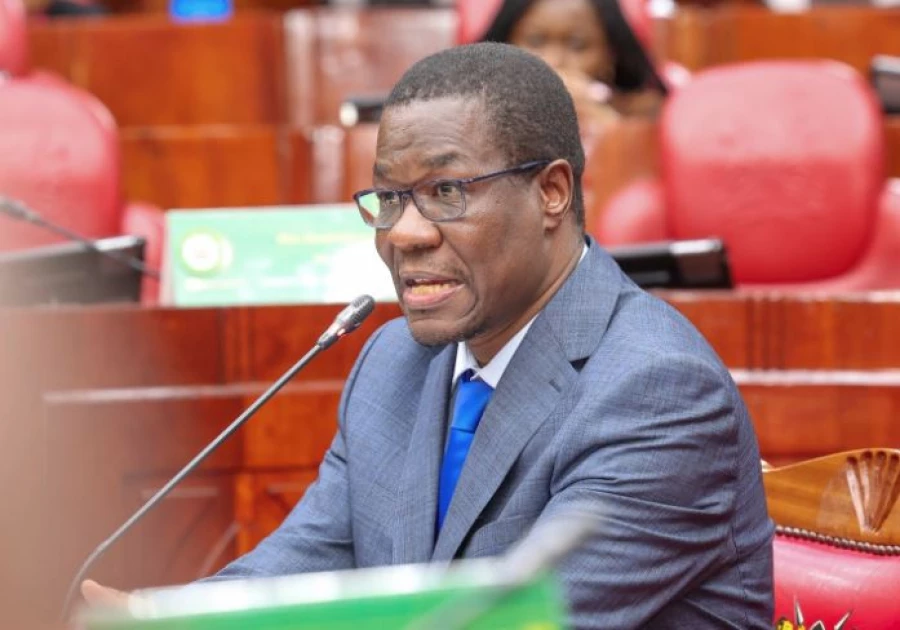
In public service, the true test of leadership is not how firmly one holds onto power, but how responsibly one relinquishes it when circumstances demand. As the pressure mounts within Kenya’s embattled petroleum sector, that test is now squarely before Opiyo Wandayi.
“Resigning is not weakness… in serious public life, it is often the clearest sign of integrity.” That principle has defined some of the most consequential political moments globally and it remains just as relevant today.
History offers perspective. David Cameron stepped down after the Brexit vote in 2016, accepting responsibility for a decision that divided a nation. Years later, he returned to government as Foreign Secretary. In Australia, Kevin Rudd resigned amid a leadership crisis in 2012, only to reclaim the premiership in 2013. Shinzo Abe resigned in 2007, returned in 2012, and went on to become Japan’s longest-serving prime minister.
Their experiences reinforce a critical point: “Resignation did not bury them… in different ways, it preserved their political names.”
Back home, however, the unfolding fuel scandal presents a starkly different picture. Senior officials directly linked to the crisis have already stepped aside. Mohamed Liban, Joe Sang, and Daniel Kiptoo exited office following allegations of manipulating fuel stock data and engaging in irregular emergency procurement.
Yet, the political head of the ministry remains in office and vocal.
“That is why it is becoming harder and harder for Kenyans to understand your position.” The concern is no longer just about the scandal itself, but about the optics of leadership in the midst of it. “Almost everyone around and under this fuel scandal has already fallen or stepped aside… yet you remain in office speaking like a commentator, not the political head of the docket.”
The contradiction is difficult to ignore. “And that is the real problem for you… if you knew, that is damning. If you did not know, that is also damning.” Either scenario raises serious concerns about accountability at the highest level.
In governance, responsibility does not dissipate as it rises it concentrates.
“Either way, it is now very difficult to convince anyone that responsibility can collapse everywhere beneath you and still stop short of your office.” This is the crux of the public unease: the perception that accountability has been applied selectively.
The call, therefore, is not about assigning guilt, but about restoring trust.
“So resign, not because it proves guilt, but because it proves character.” Stepping aside would allow investigations to proceed without perceived interference while reinforcing the principle that leadership carries ultimate responsibility.
“Resign because public trust matters more than personal comfort.” In moments of institutional strain, public confidence becomes as important as the facts under investigation.
“Resign because investigations deserve room to breathe without the shadow of office hanging over them.” This is not merely symbolic — it is a practical step toward transparency.
“And resign because history shows that a man who steps aside with dignity can still make a comeback…” The precedents are clear, and they are instructive.
The alternative, however, carries its own consequences. “…but a man who clings on while everybody around him falls only deepens suspicion.”
Ultimately, this is a defining moment.
“Resigning is not weakness, Mr. Wandayi. Sometimes it is the last remaining evidence that a leader still understands honor.”