The High Court has dismissed a petition seeking to nullify Noordin Haji's appointment as Director General of the National Intelligence Service, ruling that the President's authority to appoint the head of the spy agency is a wide constitutional discretion that cannot be lightly interfered with by the judiciary.
In a judgment delivered on March 10, 2026, Justice Chacha Mwita held that the appointment of the NIS Director General under Article 246(2) of the Constitution is an executive prerogative exercised on the advice of the National Security Council. The court found that the petitioner failed to demonstrate any procedural irregularity, illegality, irrationality or bad faith in the process leading to Haji's confirmation in office.
The petition, filed by a private citizen shortly after the appointment was gazetted in late 2025, argued that Haji lacked the requisite experience in intelligence operations, that the appointment was politically motivated and that the process bypassed mandatory vetting requirements under the National Intelligence Service Act. The petitioner also claimed the move violated principles of public participation and merit-based selection.
Justice Mwita rejected all grounds, emphasizing the unique nature of national security appointments. “The office of Director General of the National Intelligence Service is not an ordinary public office,” the judge wrote. “It is a highly sensitive position involving the protection of national security, the management of classified intelligence and the coordination of covert operations. The Constitution deliberately vests this appointment power in the President, acting on the advice of the National Security Council, precisely because such decisions require confidentiality, speed and trust in the executive’s judgment.”
The court noted that the National Security Council had vetted and recommended Haji, and Parliament’s departmental committee on defence and foreign relations had approved the nomination after a closed-door hearing. “There is no evidence that the President acted outside his constitutional authority or that the appointment was tainted by impropriety,” Justice Mwita ruled. “The petitioner’s grievances amount to disagreement with the choice, not proof of illegality. Courts do not substitute their judgment for that of the executive in matters of national security unless there is clear evidence of abuse of power.”
The judge further held that the requirement for public participation does not apply to security appointments where confidentiality is essential. “Requiring open public hearings for the appointment of the spy chief would defeat the very purpose of the office,” the ruling stated. “The Constitution balances transparency with the imperatives of national security, and this appointment complies with that balance.”
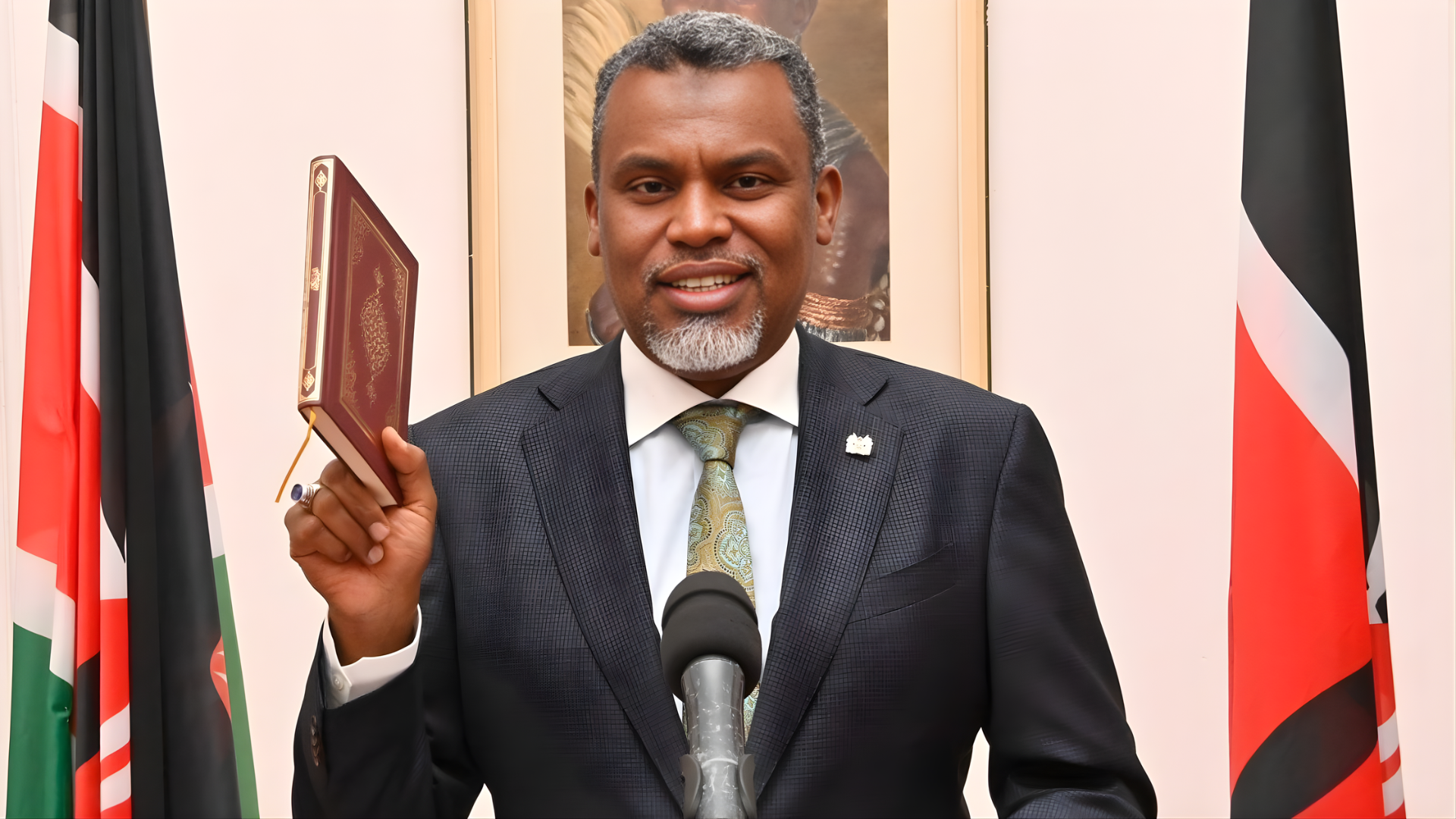
Noordin Haji, who previously served as Director of Public Prosecutions, was appointed NIS Director General in November 2025 following the retirement of Major-General (Rtd) Philip Wachira Kameru. His confirmation was gazetted after parliamentary approval, sparking the legal challenge.
The High Court’s decision clears the way for Haji to continue leading the intelligence agency at a time when Kenya faces multiple national security challenges, including terrorism threats, cross-border crime, cyber threats and internal political tensions. Haji’s tenure has already seen increased cooperation with regional and international intelligence partners, enhanced domestic surveillance capabilities and a renewed focus on countering violent extremism.
Legal analysts say the ruling reinforces the judiciary’s deference to the executive in security appointments. “This is consistent with precedent,” said constitutional lawyer Steve Oundo. “Courts are reluctant to second-guess presidential discretion in national security roles unless there is evidence of malice or gross illegality. The petitioner simply did not meet that threshold.”
The petitioner has 14 days to file a notice of appeal to the Court of Appeal. However, sources close to the legal team indicate they are considering whether to pursue further litigation given the high bar set by the High Court.
The Office of the President welcomed the ruling. A statement from State House said: “The court has affirmed the President’s constitutional authority to appoint the Director General of the National Intelligence Service. We are confident that Amb. Noordin Haji will continue to serve the nation with integrity and professionalism in safeguarding Kenya’s security.”
Haji himself has not made public comments on the ruling, but insiders say he is focused on strengthening the agency’s operational capacity and intelligence-sharing networks.
The decision brings to an end—at least at the High Court level—the legal cloud that had hung over Haji’s appointment since late 2025. It also signals that courts will continue to grant wide latitude to the executive in matters of national security, even when such appointments attract public controversy.