 Gerald Kyalo. (geraldbway).
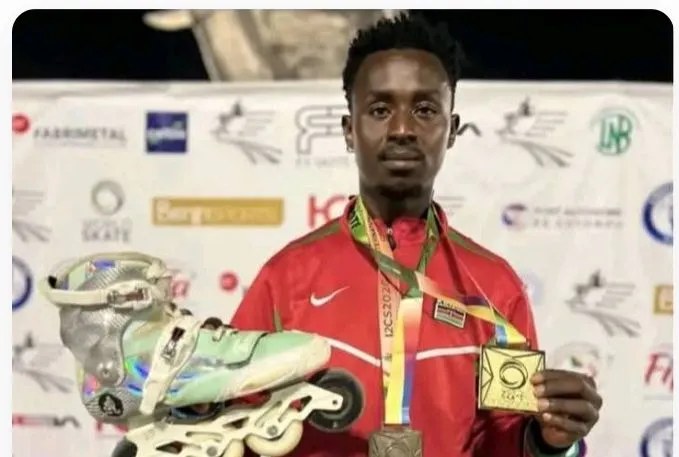
When Kelvin Kiarie Ruhiu stood atop the podium in Benin, the Kenyan national anthem played to an empty stadium. There were no cheering crowds, no flag-bearers, no ministry officials to drape him in symbolic pride. Only Kiarie, his skateboard, and a moment of triumph that seemed, in its starkness, almost personal. The young Kenyan had just claimed a historic solo gold medal at the April 2026 International Skating Challenge in Cotonou, Benin—a feat that revealed both his immense talent and the glaring neglect of non-traditional sports in Kenya.
Kiarie did not stop there. Over the course of the competition, he also clinched a silver medal, leaving no doubt about his dominance in the international skating arena. His victories, however, were not fueled by a national support system but by sheer determination, self-funding, and the help of a few fellow skaters. The Ministry of Youth, Creative Economy and Sports, despite allocating Ksh.13.5 billion to the Sports, Arts and Social Development Fund for the 2025/26 financial year, had provided little to no backing for athletes like Kiarie, who operate outside mainstream “medal-heavy” sports.
His triumph has sparked a heated debate across the nation about the systemic neglect of “lifestyle” sports and the young talents who pursue them against all odds. Kiarie’s journey to Benin was a study in perseverance. Without a national federation robust enough to provide travel stipends, logistical support, or even basic insurance for overseas competitions, he relied heavily on personal savings, contributions from friends in the skating community, and the rare acts of kindness from local supporters.
In Benin, Kiarie’s performance was nothing short of breathtaking. He glided and flipped with an elegance that left seasoned competitors struggling to keep pace. He executed technical tricks with flawless precision, combining daring acrobatics with a smooth, effortless style that only years of practice could produce. Yet, amid this display of skill and determination, there was no Kenyan delegation, no official recognition, and no corporate sponsors cheering him on. It was a solitary fight, both on and off the skateboard.
Dressed in a white and blue jersey paired with black-and-white pants, Kiarie expressed deep pride in his victory. “Hello Kenyans! I just did it! It is gold for Kenya. I am in Benin, West Africa, and I am so proud to represent my country. Thank you!” he said, his voice tinged with emotion. He paused, visibly moved by the moment, before adding, “It has been a very fierce fight, not only in the competition but also in being here itself. It was a very serious fight, super proud of myself. If I had to do it again, I would, for my country.”
The young skater’s gratitude extended beyond the applause of strangers. “For my parents, family and people who supported me, thank you so much. The last thing I would want to do is reach a breaking point. And God is grateful,” Kiarie said, acknowledging the personal sacrifices behind his achievements.
Kiarie also shared a glimpse into his future ambitions, revealing that he hoped to compete in the next event scheduled for Egypt. “By the will of God, we will do it again in Egypt next month. Thank you,” he said. His determination reflects a broader issue in Kenya’s sporting landscape: talent can thrive even in the absence of institutional support, but only if athletes possess extraordinary resilience.
Back home, Kiarie’s success resonated deeply on social media. Kenyans flooded platforms like X to celebrate his achievements, criticize the lack of government support, and demand recognition for athletes operating in less popular disciplines. Derrick Gikunda lamented, “Despite the obviously patriotic show and the lack of funds, Kiarie still proved himself, put on a show for Kenya, flew the flag high and brought glory back to his homeland. But the Cabinet Secretary for Sports hasn’t even said a word. No one in government has congratulated him. A fitting metaphor of a government that pretends to care for the youth!”
Other voices echoed the sentiment. Nyto Mwangi highlighted the contrast between Kiarie’s talent and lack of resources, recalling that during a previous international competition in Singapore, the skater lacked proper gear and a coach, even having to borrow support from the Benin coach. Marketing executive Nyandia Gachago urged local brands to step in: “Kenyans are doing incredible things in sports and creative arts but have little to no support. Patriotism has many faces. One of them is supporting local talent to the very end and beyond.”
Diana Mboi reflected on the human cost of this neglect, noting the emotional toll of Kiarie’s solitary struggle. “Seeing him stand alone during the opening ceremony with a homemade placard broke my heart so bad. He fundraised for himself to go for this competition, beat such insurmountable odds to win. Kenya can kill your spirit.”
Despite this, Kiarie’s triumph galvanized his local community. On Monday, April 7, the Nairobi skating community took to the streets in celebration. Hundreds of skaters glided elegantly down the city roads, banners waving, music blaring, and a tangible sense of pride electrifying the air. For many, it was a vindication of Kiarie’s perseverance and a statement to authorities that Kenya’s non-traditional athletes cannot be ignored.
Beyond sports, Kiarie is also an engaged citizen. He has actively participated in local politics in Roysambu and has hinted at pursuing a parliamentary seat in 2027, demonstrating that his ambitions extend beyond skateboarding. His story serves as a powerful reminder: talent, courage, and persistence can shine even without institutional support—but meaningful recognition and investment from the state could transform these individual victories into national pride.
Kelvin Kiarie Ruhiu’s gold medal in Benin is more than a personal achievement. It is a mirror reflecting Kenya’s sporting priorities, a call for reform, and an inspiration for young athletes dreaming of international glory despite the odds. Alone on the podium, he carried the hopes of a generation—and he did so with grace, skill, and unwavering determination.
Kiarie did not stop there. Over the course of the competition, he also clinched a silver medal, leaving no doubt about his dominance in the international skating arena. His victories, however, were not fueled by a national support system but by sheer determination, self-funding, and the help of a few fellow skaters. The Ministry of Youth, Creative Economy and Sports, despite allocating Ksh.13.5 billion to the Sports, Arts and Social Development Fund for the 2025/26 financial year, had provided little to no backing for athletes like Kiarie, who operate outside mainstream “medal-heavy” sports.
His triumph has sparked a heated debate across the nation about the systemic neglect of “lifestyle” sports and the young talents who pursue them against all odds. Kiarie’s journey to Benin was a study in perseverance. Without a national federation robust enough to provide travel stipends, logistical support, or even basic insurance for overseas competitions, he relied heavily on personal savings, contributions from friends in the skating community, and the rare acts of kindness from local supporters.
In Benin, Kiarie’s performance was nothing short of breathtaking. He glided and flipped with an elegance that left seasoned competitors struggling to keep pace. He executed technical tricks with flawless precision, combining daring acrobatics with a smooth, effortless style that only years of practice could produce. Yet, amid this display of skill and determination, there was no Kenyan delegation, no official recognition, and no corporate sponsors cheering him on. It was a solitary fight, both on and off the skateboard.
Dressed in a white and blue jersey paired with black-and-white pants, Kiarie expressed deep pride in his victory. “Hello Kenyans! I just did it! It is gold for Kenya. I am in Benin, West Africa, and I am so proud to represent my country. Thank you!” he said, his voice tinged with emotion. He paused, visibly moved by the moment, before adding, “It has been a very fierce fight, not only in the competition but also in being here itself. It was a very serious fight, super proud of myself. If I had to do it again, I would, for my country.”
The young skater’s gratitude extended beyond the applause of strangers. “For my parents, family and people who supported me, thank you so much. The last thing I would want to do is reach a breaking point. And God is grateful,” Kiarie said, acknowledging the personal sacrifices behind his achievements.
Kiarie also shared a glimpse into his future ambitions, revealing that he hoped to compete in the next event scheduled for Egypt. “By the will of God, we will do it again in Egypt next month. Thank you,” he said. His determination reflects a broader issue in Kenya’s sporting landscape: talent can thrive even in the absence of institutional support, but only if athletes possess extraordinary resilience.
Back home, Kiarie’s success resonated deeply on social media. Kenyans flooded platforms like X to celebrate his achievements, criticize the lack of government support, and demand recognition for athletes operating in less popular disciplines. Derrick Gikunda lamented, “Despite the obviously patriotic show and the lack of funds, Kiarie still proved himself, put on a show for Kenya, flew the flag high and brought glory back to his homeland. But the Cabinet Secretary for Sports hasn’t even said a word. No one in government has congratulated him. A fitting metaphor of a government that pretends to care for the youth!”
Other voices echoed the sentiment. Nyto Mwangi highlighted the contrast between Kiarie’s talent and lack of resources, recalling that during a previous international competition in Singapore, the skater lacked proper gear and a coach, even having to borrow support from the Benin coach. Marketing executive Nyandia Gachago urged local brands to step in: “Kenyans are doing incredible things in sports and creative arts but have little to no support. Patriotism has many faces. One of them is supporting local talent to the very end and beyond.”
Diana Mboi reflected on the human cost of this neglect, noting the emotional toll of Kiarie’s solitary struggle. “Seeing him stand alone during the opening ceremony with a homemade placard broke my heart so bad. He fundraised for himself to go for this competition, beat such insurmountable odds to win. Kenya can kill your spirit.”
Despite this, Kiarie’s triumph galvanized his local community. On Monday, April 7, the Nairobi skating community took to the streets in celebration. Hundreds of skaters glided elegantly down the city roads, banners waving, music blaring, and a tangible sense of pride electrifying the air. For many, it was a vindication of Kiarie’s perseverance and a statement to authorities that Kenya’s non-traditional athletes cannot be ignored.
Beyond sports, Kiarie is also an engaged citizen. He has actively participated in local politics in Roysambu and has hinted at pursuing a parliamentary seat in 2027, demonstrating that his ambitions extend beyond skateboarding. His story serves as a powerful reminder: talent, courage, and persistence can shine even without institutional support—but meaningful recognition and investment from the state could transform these individual victories into national pride.
Kelvin Kiarie Ruhiu’s gold medal in Benin is more than a personal achievement. It is a mirror reflecting Kenya’s sporting priorities, a call for reform, and an inspiration for young athletes dreaming of international glory despite the odds. Alone on the podium, he carried the hopes of a generation—and he did so with grace, skill, and unwavering determination.